
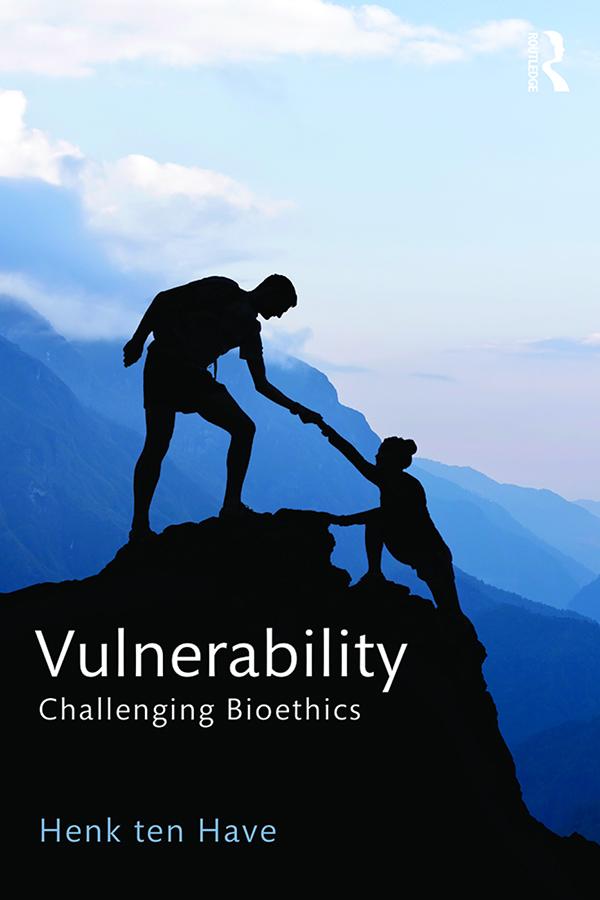
Alongside globalization, the sense of vulnerability among people and populations has increased. We feel vulnerable to disease as new infections spread rapidly across the globe, while disasters and climate change make health increasingly precarious. Moreover, clinical trials of new drugs often exploit vulnerable populations in developing countries that otherwise have no access to healthcare and new genetic technologies make people with disabilities vulnerable to discrimination. Therefore the concept of ‘vulnerability’ has contributed new ideas to the debates about the ethical dimensions of medicine and healthcare.
This book explains and elaborates the new concept of vulnerability in today’s bioethics. Firstly, Henk ten Have argues that vulnerability cannot be fully understood within the framework of individual autonomy that dominates mainstream bioethics today: it is often not the individual person who is vulnerable, rather that his or her vulnerability is created through the social and economic conditions in which he or she lives. Contending that the language of vulnerability offers perspectives beyond the traditional autonomy model, this book offers a new approach which will enable bioethics to evolve into a global enterprise.
This groundbreaking book critically analyses the concept of vulnerability as a global phenomenon. It will appeal to scholars and students of ethics, bioethics, globalization, healthcare, medical science, medical research, culture, law, and politics.
Betal enkelt med kort, Klarna, Apple Pay eller Google Pay. Ikke fornøyd? Du har alltid 14 dagers angrerett. Les mer i våre vilkår. Har du spørsmål, send oss en e-post på hello@memmo.org.
Memmo gjør det enklere å studere – uansett hvor du er i verden. Hos oss samler du pensumbøker og smarte studieverktøy på ett og samme sted: sammendrag, quizer, podkaster og flashcards. Og så Ted, din studiekompis som svarer på alt du lurer på. Over 50 000 studenter studerer allerede her – bygget for at du skal lære raskere og stresse mindre.