
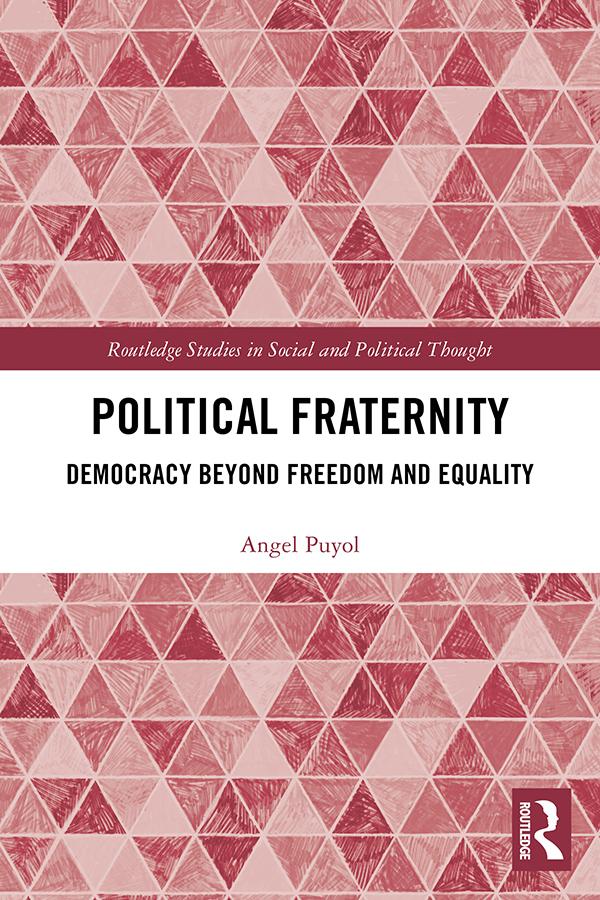
Fraternity is a feeling, and a moral virtue, but fraternity is also a political concept.
The French Revolution proclaimed an ethical and political ideal with its three principles: liberty, equality and fraternity. Since then, western political philosophy has gone to great lengths to analyse the liberty and equality, but has ignored, and even disdained, the third part of the revolutionary triad: fraternity. Forgetting or underestimating fraternity as a political category is unjustifiable. Political fraternity can help us to overcome some of the main problems with liberal egalitarianism and theories of liberty in current social and political thought, and it contributes to a better understanding of the real significance of justice and democracy.
In this book, Angel Puyol examines the theoretical and normative challenges of the political idea of fraternity, its history and meanings, its role in current political philosophy, its distinction regarding related concepts – such as relational equality, solidarity or civic friendship – the place that political fraternity should occupy in feminist criticism, and its relationship to social justice, global justice and democracy in modern-day politics.
Betal enkelt med kort, Klarna, Apple Pay eller Google Pay. Ikke fornøyd? Du har alltid 14 dagers angrerett. Les mer i våre vilkår. Har du spørsmål, send oss en e-post på hello@memmo.org.
Memmo gjør det enklere å studere – uansett hvor du er i verden. Hos oss samler du pensumbøker og smarte studieverktøy på ett og samme sted: sammendrag, quizer, podkaster og flashcards. Og så Ted, din studiekompis som svarer på alt du lurer på. Over 50 000 studenter studerer allerede her – bygget for at du skal lære raskere og stresse mindre.