
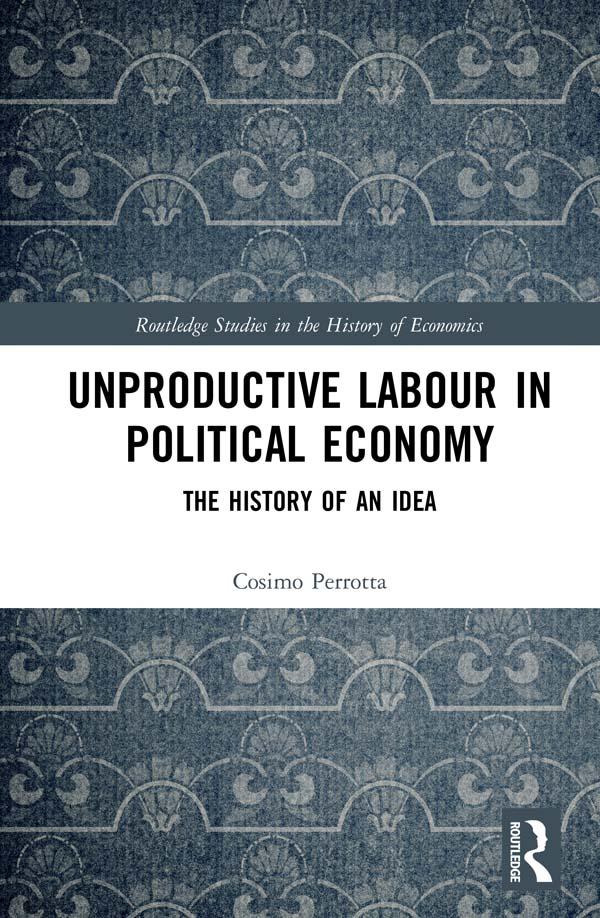
Contemporary mainstream economists see social wealth as the sum of individual incomes, but for three centuries many economists saw wealth as consisting of the public and private resources of a nation. This led them to explore the idea of unproductive labour, which provides a nation with an individual income, but does not contribute to an increase in social wealth or help to foster development.
This book analyses the evolution of ideas surrounding unproductive labour, offering an unprecedented history that guides readers from the work of Petty through to the present economic crisis. This volume explores the work of several key scholars, including Smith, Petty, Marx, Ricardo, Mill, Say and Schumpeter.
This book is suitable for scholars and researchers with an interest in the history of economic thought, labour economics and economic philosophy.
Winner of the 2019 Ernest Lluch Prize from the Spanish Association of Economic History
Betal enkelt med kort, Klarna, Apple Pay eller Google Pay. Ikke fornøyd? Du har alltid 14 dagers angrerett. Les mer i våre vilkår. Har du spørsmål, send oss en e-post på hello@memmo.org.
Memmo gjør det enklere å studere – uansett hvor du er i verden. Hos oss samler du pensumbøker og smarte studieverktøy på ett og samme sted: sammendrag, quizer, podkaster og flashcards. Og så Ted, din studiekompis som svarer på alt du lurer på. Over 50 000 studenter studerer allerede her – bygget for at du skal lære raskere og stresse mindre.