
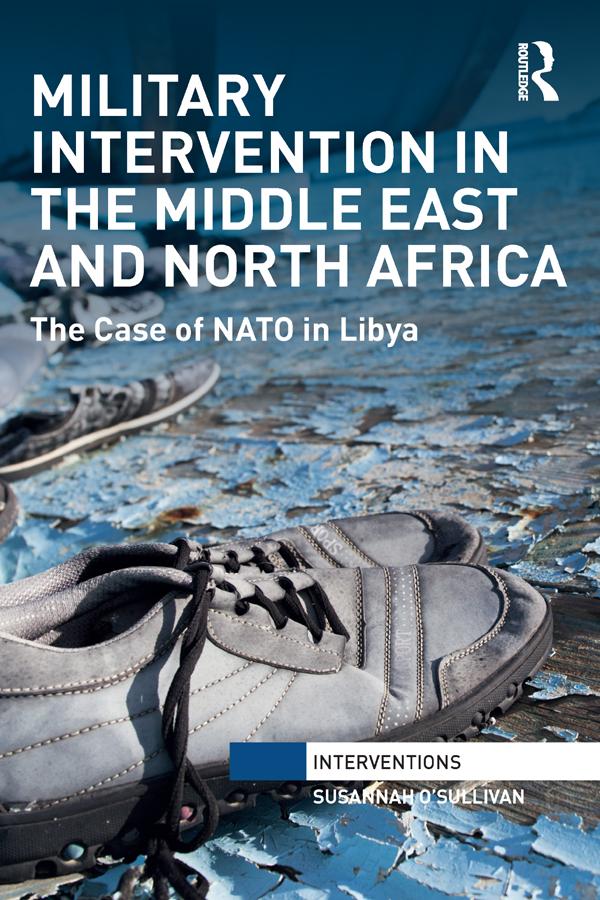
This book contributes to an increasingly important branch of critical security studies that combines insights from critical geopolitics and postcolonial critique by making an argument about the geographies of violence and their differential impact in contemporary security practices, including but not limited to military intervention. The book explores military intervention in Libya through the categories of space and time, to provide a robust ethico-political critique of the intervention.
Much of the mainstream international relations scholarship on humanitarian intervention frames the ethical, moral and legal debate over intervention in terms of a binary, between human rights and state sovereignty. In response, O’Sullivan questions the ways in which military violence was produced as a rational and reasonable response to the crisis in Libya, outlining and destabilising this false binary between the human and the state. The book offers methodological tools for questioning the violent institutions at the heart of humanitarian intervention and asking how intervention has been produced as a rational response to crisis.
Contributing to the ongoing academic conversation in the critical literature on spatiality, militarism and resistance, the book draws upon postcolonial and poststructural approaches to critical security studies, and will be of great interest to scholars and graduates of critical security studies and international relations.
Betal enkelt med kort, Klarna, Apple Pay eller Google Pay. Ikke fornøyd? Du har alltid 14 dagers angrerett. Les mer i våre vilkår. Har du spørsmål, send oss en e-post på hello@memmo.org.
Memmo gjør det enklere å studere – uansett hvor du er i verden. Hos oss samler du pensumbøker og smarte studieverktøy på ett og samme sted: sammendrag, quizer, podkaster og flashcards. Og så Ted, din studiekompis som svarer på alt du lurer på. Over 50 000 studenter studerer allerede her – bygget for at du skal lære raskere og stresse mindre.