
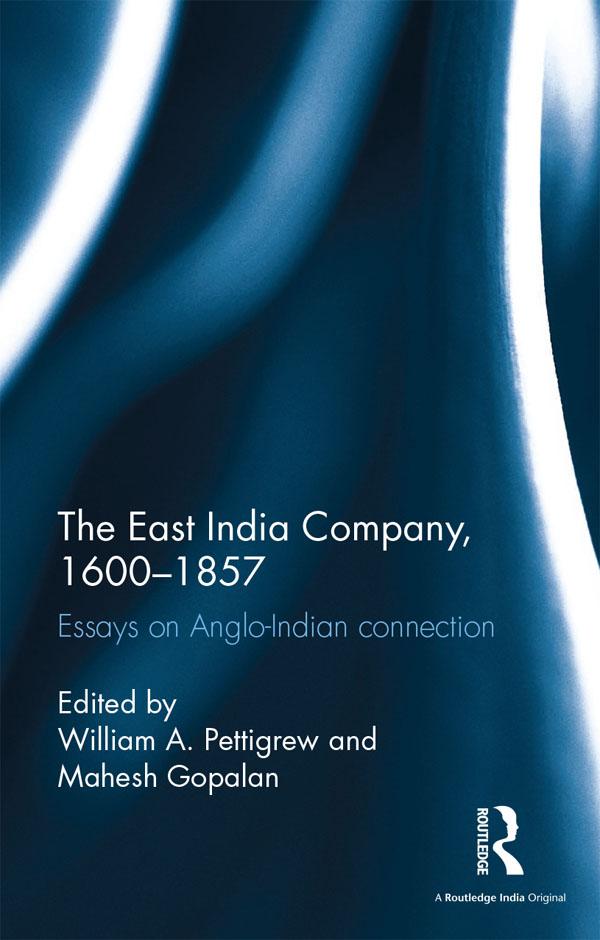
This book employs a wide range of perspectives to demonstrate how the East India Company facilitated cross-cultural interactions between the English and various groups in South Asia between 1600 to 1857 and how these interactions transformed important features of both British and South Asian history. Rather than viewing the Company as an organization projecting its authority from London to India, the volume shows how the Company’s history and its broader historical significance can best be understood by appreciating the myriad ways in which these interactions shaped the Company’s story and altered the course of history. Bringing together the latest research and several case studies, the work includes examinations of the formulation of economic theory, the development of corporate strategy, the mechanics of state finance, the mapping of maritime jurisdiction, the government and practice of religions, domesticity, travel, diplomacy, state formation, art, gift-giving, incarceration, and rebellion. Together, the essays will advance the understanding of the peculiarly corporate features of cross-cultural engagement during a crucial early phase of globalization.
Insightful and lucid, this volume will be useful to scholars and researchers of modern history, South Asian studies, economic history, and political studies.
Betal enkelt med kort, Klarna, Apple Pay eller Google Pay. Ikke fornøyd? Du har alltid 14 dagers angrerett. Les mer i våre vilkår. Har du spørsmål, send oss en e-post på hello@memmo.org.
Memmo gjør det enklere å studere – uansett hvor du er i verden. Hos oss samler du pensumbøker og smarte studieverktøy på ett og samme sted: sammendrag, quizer, podkaster og flashcards. Og så Ted, din studiekompis som svarer på alt du lurer på. Over 50 000 studenter studerer allerede her – bygget for at du skal lære raskere og stresse mindre.