
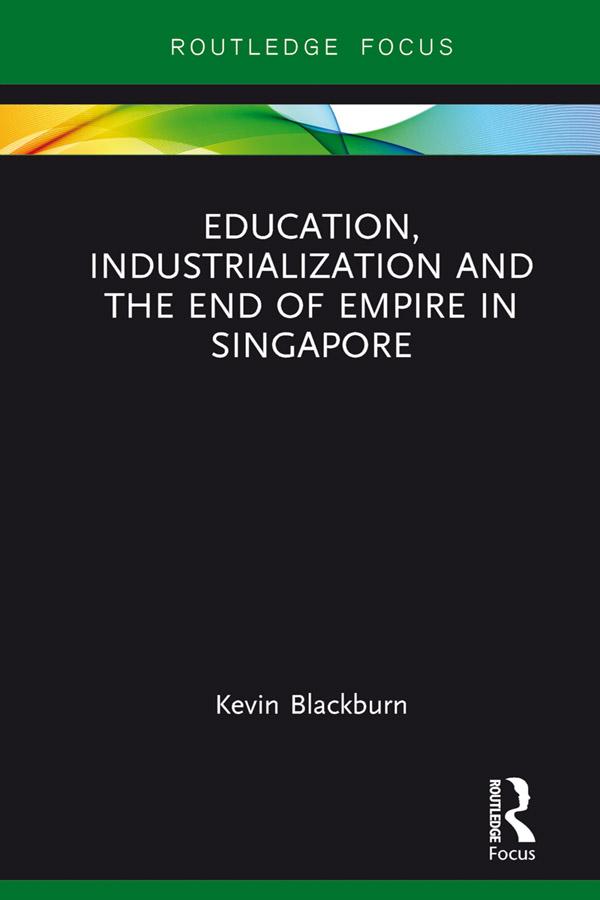
Singapore under the ruling People’s Action Party government has been categorized as a developmental state which has utilized education as an instrument of its economic policies and nation-building agenda. However, contrary to accepted assumptions, the use of education by the state to promote economic growth did not begin with the coming to power of the People’s Action Party in 1959. In Singapore, the colonial state had been using education to meet the demands of its colonial economy well before the rise of the post-independence developmental state. Education, Industrialization and the End of Empire in Singapore examines how the state’s use of education as an instrument of economic policy had its origins in the colonial economy and intensified during the process of decolonization. By covering this process the history of vocational and technical education and its relationship with the economy is traced from the colonial era through to decolonization and into the early postcolonial period.
Betal enkelt med kort, Klarna, Apple Pay eller Google Pay. Ikke fornøyd? Du har alltid 14 dagers angrerett. Les mer i våre vilkår. Har du spørsmål, send oss en e-post på hello@memmo.org.
Memmo gjør det enklere å studere – uansett hvor du er i verden. Hos oss samler du pensumbøker og smarte studieverktøy på ett og samme sted: sammendrag, quizer, podkaster og flashcards. Og så Ted, din studiekompis som svarer på alt du lurer på. Over 50 000 studenter studerer allerede her – bygget for at du skal lære raskere og stresse mindre.