
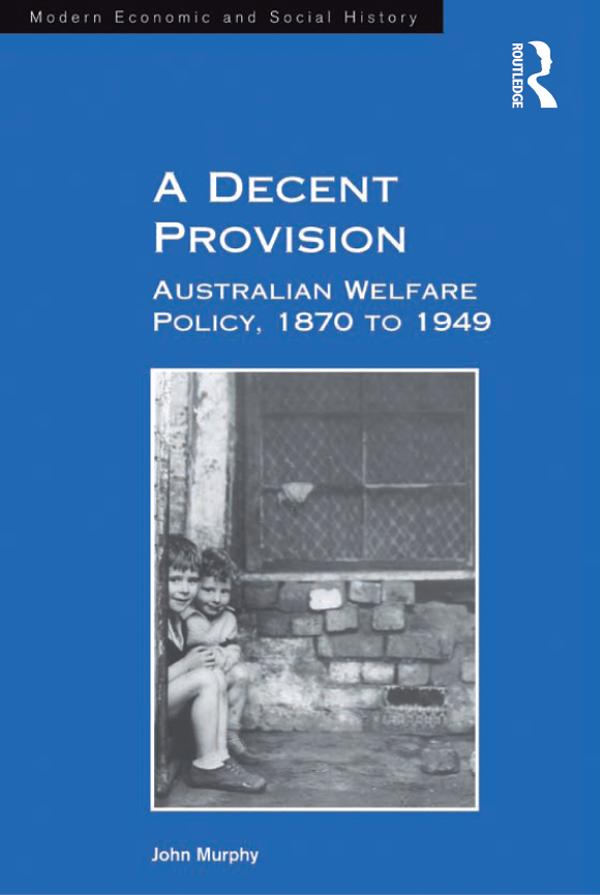
A Decent Provision is a narrative history of how and why Australia built a distinctive welfare regime in the period from the 1870s to 1949. At the beginning of this period, the Australian colonies were belligerently insisting they must not have a Poor Law, yet had reproduced many of the systems of charitable provision in Britain. By the start of the twentieth century, a combination of extended suffrage, basic wage regulation and the aged pension had led to a reputation as a 'social laboratory'. And yet half a century later, Australia was a 'welfare laggard' and the Labor Party's welfare state of the mid-1940s was a relatively modest and parsimonious construction. Models of welfare based on social insurance had been vigorously rejected, and the Australian system continued on a path of highly residual, targeted welfare payments. The book explains this curious and halting trajectory, showing how choices made in earlier decades constrained what could be done, and what could be imagined. Based on extensive new research from a variety of primary sources it makes a significant contribution to general historical debates, as well as to the field of comparative social policy.
Betal enkelt med kort, Klarna, Apple Pay eller Google Pay. Ikke fornøyd? Du har alltid 14 dagers angrerett. Les mer i våre vilkår. Har du spørsmål, send oss en e-post på hello@memmo.org.
Memmo gjør det enklere å studere – uansett hvor du er i verden. Hos oss samler du pensumbøker og smarte studieverktøy på ett og samme sted: sammendrag, quizer, podkaster og flashcards. Og så Ted, din studiekompis som svarer på alt du lurer på. Over 50 000 studenter studerer allerede her – bygget for at du skal lære raskere og stresse mindre.
Du vil kanskje også like
Kjøp boken0