
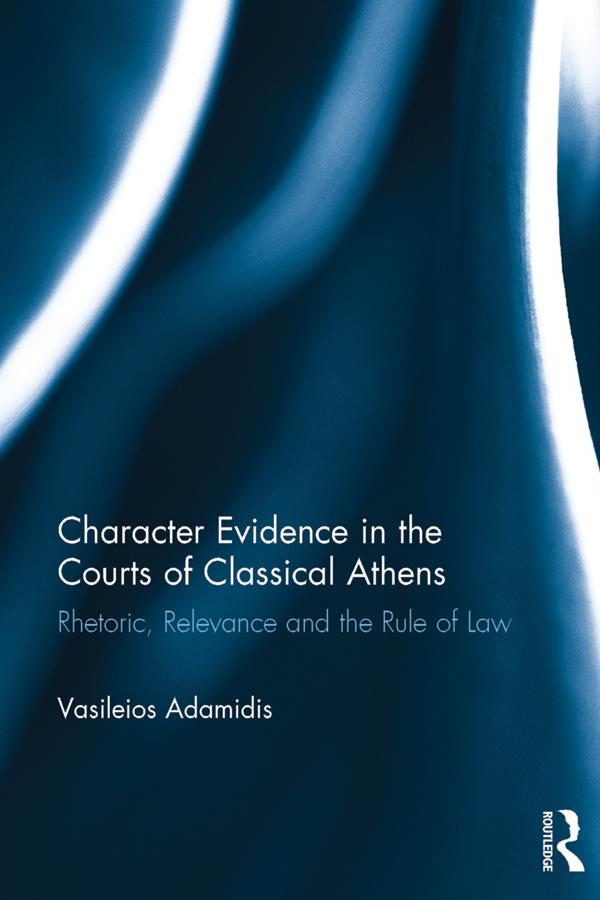
There has been much debate in scholarship over the factors determining the outcome of legal hearings in classical Athens. Specifically, there is divergence regarding the extent to which judicial panels were influenced by non-legal considerations in addition to, or even instead of, questions of law. Ancient rhetorical theory and practice devoted much attention to character and it is this aspect of Athenian law which forms the focus of this book. Close analysis of the dispute-resolution passages in ancient Greek literature reveals striking similarities with the rhetoric of litigants in the Athenian courts and thus helps to shed light on the function of the courts and the fundamental nature of Athenian law. The widespread use of character evidence in every aspect of argumentation can be traced to the Greek ideas of ‘character’ and ‘personality’, the inductive method of reasoning, and the social, political and institutional structures of the ancient Greek polis. According to the author’s proposed method of interpretation, character evidence was not a means of diverting the jury’s attention away from the legal issues; instead, it was a constructive and relevant way of developing a legal argument.
Betal enkelt med kort, Klarna, Apple Pay eller Google Pay. Ikke fornøyd? Du har alltid 14 dagers angrerett. Les mer i våre vilkår. Har du spørsmål, send oss en e-post på hello@memmo.org.
Memmo gjør det enklere å studere – uansett hvor du er i verden. Hos oss samler du pensumbøker og smarte studieverktøy på ett og samme sted: sammendrag, quizer, podkaster og flashcards. Og så Ted, din studiekompis som svarer på alt du lurer på. Over 50 000 studenter studerer allerede her – bygget for at du skal lære raskere og stresse mindre.