
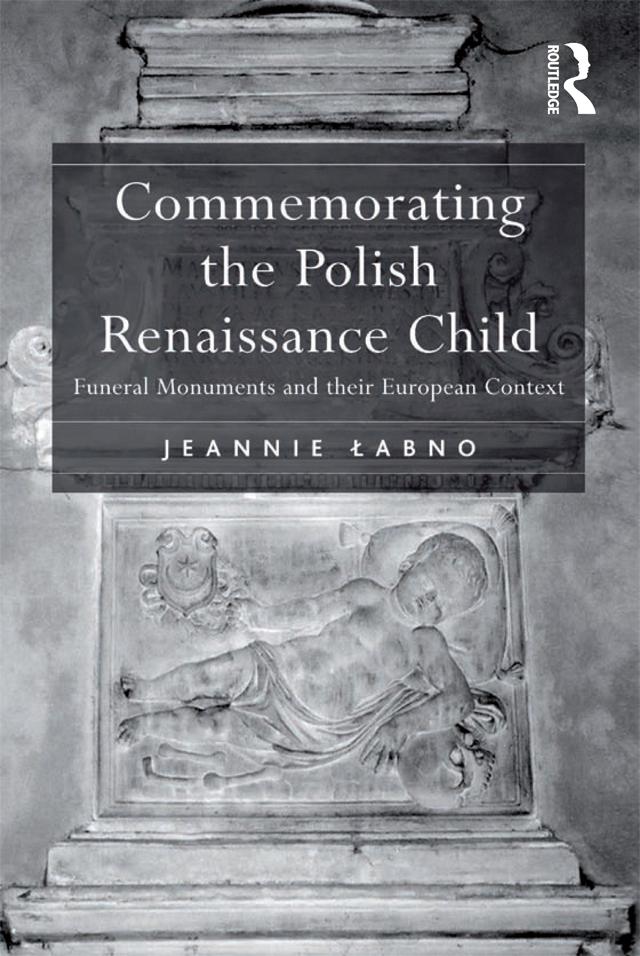
The study of funeral monuments is a growing field, but monuments erected to commemorate children have so far received little attention. Whilst the practice of erecting monuments to the dead was widespread across Renaissance Europe, the vast majority of these commemorated adults, with children generally only appearing as part of their parents' memorials. However, as this study reveals, in Poland there developed a very different tradition of funerary monuments designed for, and dedicated to, individual children - daughters as well as sons. The book consists of five major parts, which could be read in any order, though the overall sequencing is based on the premise that an understanding of the context and background will enhance a reading of these fascinating child monuments. Consequently, there is a progression of knowledge presented from the broader context of the earlier parts, towards the final parts where the actual child monuments are discussed in detail. Thus the book begins with an overview of the wider cultural contexts of funerary monuments and where children fitted into this. It then moves on to to look at the 'forgotten Renaissance' of central Europe and specifically the situation in Poland. The middle part addresses the 'culture of memory', examining the role of funerary monuments in reinforcing social, religious and familial continuity. The last parts deal with the physical monuments: empirical data, iconography and iconology. Through this illuminating consideration of children's monuments, the book raises a host of fascinating questions relating to Polish social and cultural life, family structure, attitudes to children and gender. It also addresses the issue of why Poland witnessed this unusual development, and what this tells us about the transmission of cultural and artistic ideas across Renaissance Europe. Drawing upon social and cultural history, visual and gender studies, the work not only asks important new questions, but provides a fresh perspective on some familiar topics and themes within Renaissance history.
Betal enkelt med kort, Klarna, Apple Pay eller Google Pay. Ikke fornøyd? Du har alltid 14 dagers angrerett. Les mer i våre vilkår. Har du spørsmål, send oss en e-post på hello@memmo.org.
Memmo gjør det enklere å studere – uansett hvor du er i verden. Hos oss samler du pensumbøker og smarte studieverktøy på ett og samme sted: sammendrag, quizer, podkaster og flashcards. Og så Ted, din studiekompis som svarer på alt du lurer på. Over 50 000 studenter studerer allerede her – bygget for at du skal lære raskere og stresse mindre.
Du vil kanskje også like
Kjøp boken0