
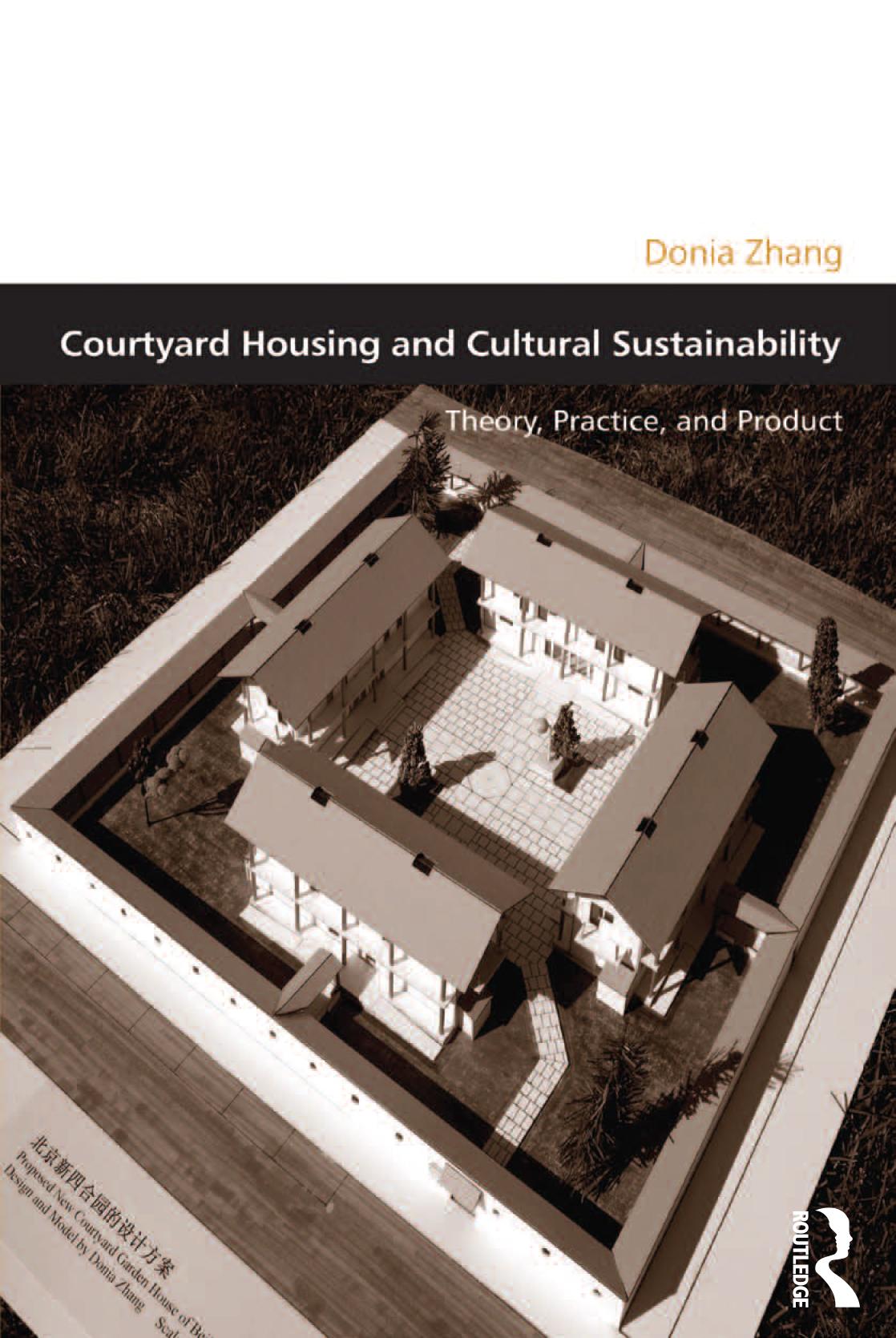
Cultural sustainability is a very important aspect of the overall sustainability framework and is regarded as the fourth pillar alongside the other three: environmental, economic, and social sustainability. However, the concept is neither fully explored, nor widely accepted or recognized. This book elicits the interplay of nature-culture-architecture and theorizes the concept of cultural sustainability and culturally sustainable architecture. It identifies four key themes in Chinese philosophy: Harmony with Heaven, Harmony with Earth, Harmony with Humans, and Harmony with Self, along with Greek philosopher Aristotle’s physics: form, space, matter, and time, it sets them as criteria to evaluate the renewed and new courtyard housing projects constructed in China since the 1990s. Using an innovative architectural and social science approach, this book examines the political, economic, social, and spatial factors that affect cultural sustainability. Supported by a multiplicity of data including: field surveys, interviews with residents, architects, and planners, time diaries, drawings, photos, planning documents, observation notes, and real estate brochures, the book proposes new courtyard garden house design strategies that promote healthy communities and human care for one another, a concept that is universally applicable. The volume is a first opportunity to take a holistic view, to encompass eastern and western, tangible and intangible, cultures in the theorization of cultural sustainability and culturally sustainable architecture. It is a comprehensive contribution to architectural theory.
Betal enkelt med kort, Klarna, Apple Pay eller Google Pay. Ikke fornøyd? Du har alltid 14 dagers angrerett. Les mer i våre vilkår. Har du spørsmål, send oss en e-post på hello@memmo.org.
Memmo gjør det enklere å studere – uansett hvor du er i verden. Hos oss samler du pensumbøker og smarte studieverktøy på ett og samme sted: sammendrag, quizer, podkaster og flashcards. Og så Ted, din studiekompis som svarer på alt du lurer på. Over 50 000 studenter studerer allerede her – bygget for at du skal lære raskere og stresse mindre.