
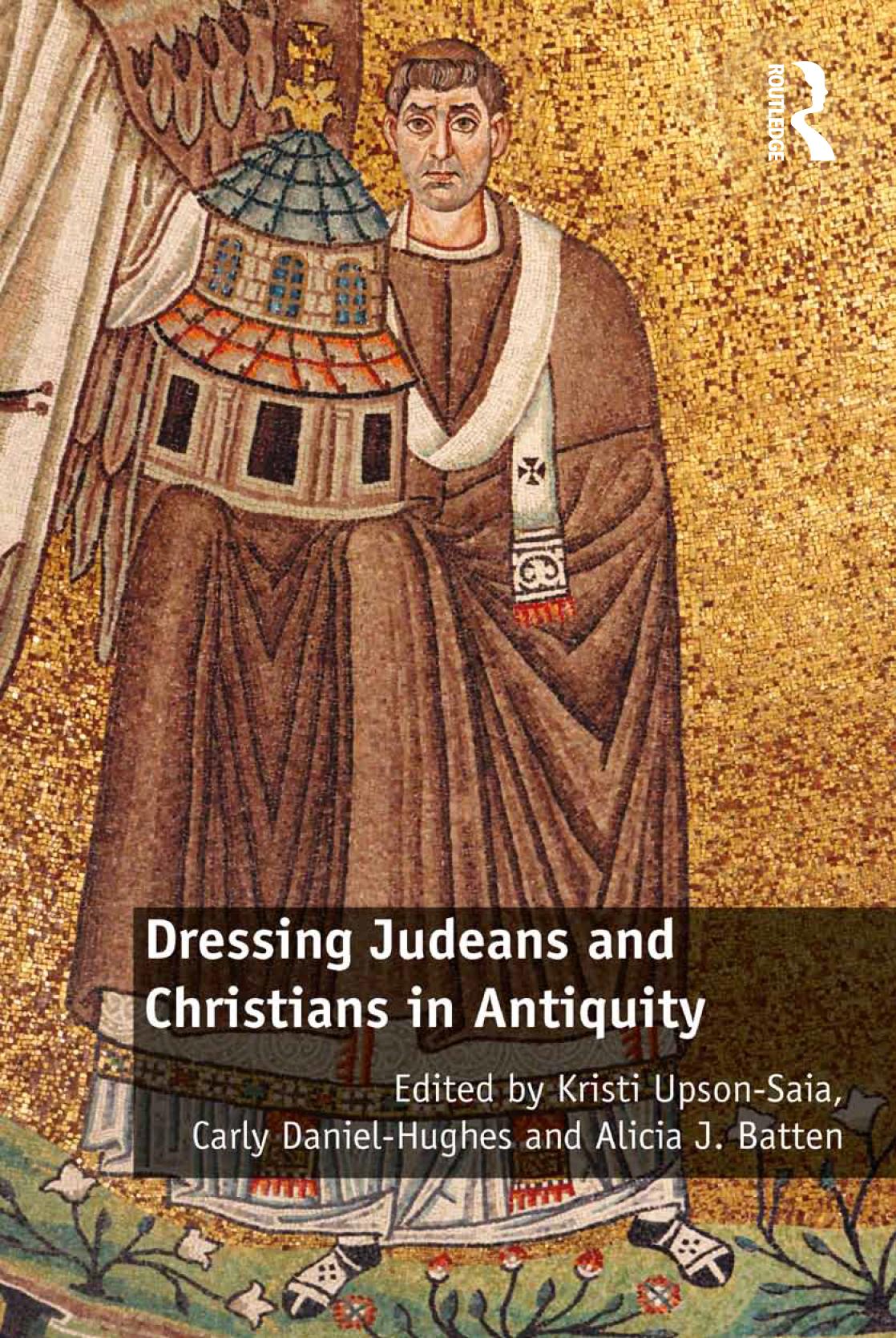
The past two decades have witnessed a proliferation of scholarship on dress in the ancient world. These recent studies have established the extent to which Greece and Rome were vestimentary cultures, and they have demonstrated the critical role dress played in communicating individuals’ identities, status, and authority. Despite this emerging interest in ancient dress, little work has been done to understand religious aspects and uses of dress. This volume aims to fill this gap by examining a diverse range of religious sources, including literature, art, performance, coinage, economic markets, and memories. Employing theoretical frames from a range of disciplines, contributors to the volume demonstrate how dress developed as a topos within Judean and Christian rhetoric, symbolism, and performance from the first century BCE to the fifth century CE. Specifically, they demonstrate how religious meanings were entangled with other social logics, revealing the many layers of meaning attached to ancient dress, as well as the extent to which dress was implicated in numerous domains of ancient religious life.
Betal enkelt med kort, Klarna, Apple Pay eller Google Pay. Ikke fornøyd? Du har alltid 14 dagers angrerett. Les mer i våre vilkår. Har du spørsmål, send oss en e-post på hello@memmo.org.
Memmo gjør det enklere å studere – uansett hvor du er i verden. Hos oss samler du pensumbøker og smarte studieverktøy på ett og samme sted: sammendrag, quizer, podkaster og flashcards. Og så Ted, din studiekompis som svarer på alt du lurer på. Over 50 000 studenter studerer allerede her – bygget for at du skal lære raskere og stresse mindre.
Du vil kanskje også like
Kjøp boken0