
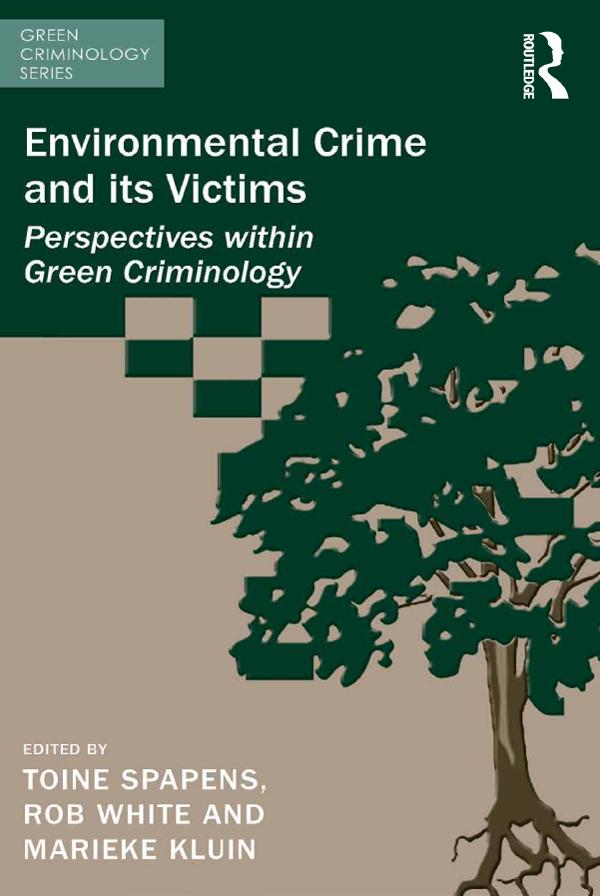
Environmental crime is one of the most profitable and fastest growing areas of international criminal activity. These types of crime, however, do not always produce an immediate consequence, and the harm may be diffused. As such, the complexity of victimization - in terms of time, space, impact, and who or what is victimized - is one of the reasons why governments and the enforcement community have trouble in finding suitable and effective responses. This book provides a diverse and provocative array of arguments, critiques and recommendations from leading researchers and scholars in the field of green criminology. The chapters are divided into three main sections: the first part deals with specific characteristics of some of the major types of environmental crime and its perpetrators; the second focuses explicitly on the problem of victimization in cases of environmental crime; and the third addresses the question of how to tackle this problem. Discussing these topics from the point of view of green criminological theory, sociology, law enforcement, community wellbeing, environmental activism and victimology, this book will be of great interest to all those concerned about crime and the environment.
Betal enkelt med kort, Klarna, Apple Pay eller Google Pay. Ikke fornøyd? Du har alltid 14 dagers angrerett. Les mer i våre vilkår. Har du spørsmål, send oss en e-post på hello@memmo.org.
Memmo gjør det enklere å studere – uansett hvor du er i verden. Hos oss samler du pensumbøker og smarte studieverktøy på ett og samme sted: sammendrag, quizer, podkaster og flashcards. Og så Ted, din studiekompis som svarer på alt du lurer på. Over 50 000 studenter studerer allerede her – bygget for at du skal lære raskere og stresse mindre.
Du vil kanskje også like
Kjøp boken0