
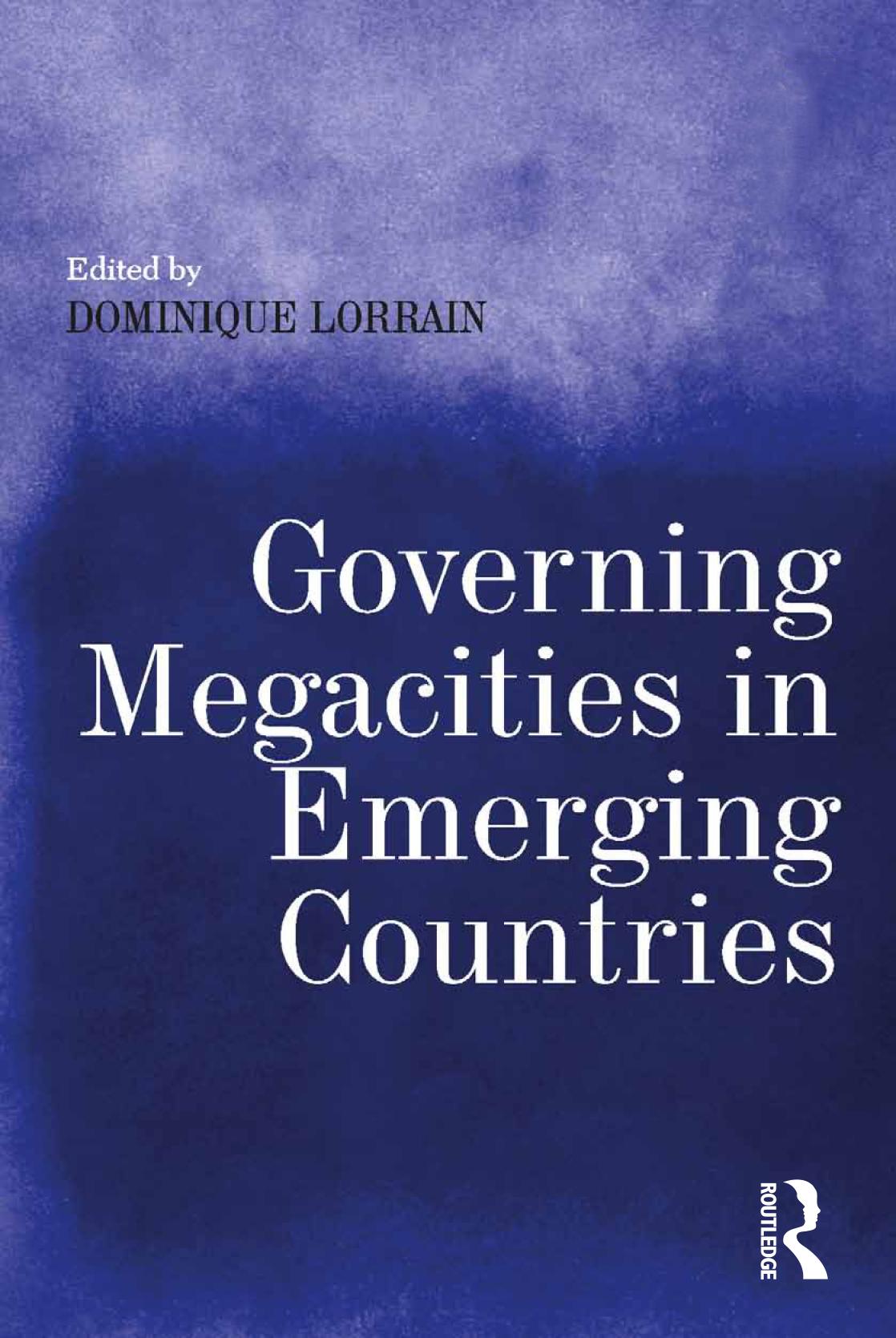
Megacities are a new phenomenon in history. The fact that many of them are in emerging countries deepens the challenges of governing these spaces. Can these vast, complex entities, rife with inequalities and divisions, be governed effectively? For researchers, the answer has often been no. The approach developed in this work focuses on the material city and its institutions and shows that, without recourse to a big new theory, urban leaders have devised mechanisms of ordinary government. They have done so through the resolution of practical and essential problems: providing electricity, drinking water, sanitation, transportation. Three findings emerge from this book. Infrastructure networks help to structure cities and function as mechanisms of cohesion. Megacities become more governable if there is a legitimate authority capable of making choices. Finally, anarchic urbanisation has its roots in systems of land ownership, in inadequate urban planning and in the practices of developers and local actors. In the originality of its hypotheses and the precision of the analyses carried out in the four case study cities of Shanghai, Mumbai, Cape Town and Santiago de Chile, this work is addressed to all those interested in the life of cities: politicians, local and central government officials, executives in urban companies, researchers and students.
Sider: 314
Kategori: Arkitektur & Stadsplanering
e-ISBN: 9781317125617
Fraktvekt: 1.2 kg
Sendes innen: 1-2 dager
Betal enkelt med kort, Klarna, Apple Pay eller Google Pay. Ikke fornøyd? Du har alltid 14 dagers angrerett. Les mer i våre vilkår. Har du spørsmål, send oss en e-post på hello@memmo.org.
Memmo gjør det enklere å studere – uansett hvor du er i verden. Hos oss samler du pensumbøker og smarte studieverktøy på ett og samme sted: sammendrag, quizer, podkaster og flashcards. Og så Ted, din studiekompis som svarer på alt du lurer på. Over 50 000 studenter studerer allerede her – bygget for at du skal lære raskere og stresse mindre.
Du vil kanskje også like
Kjøp boken0