
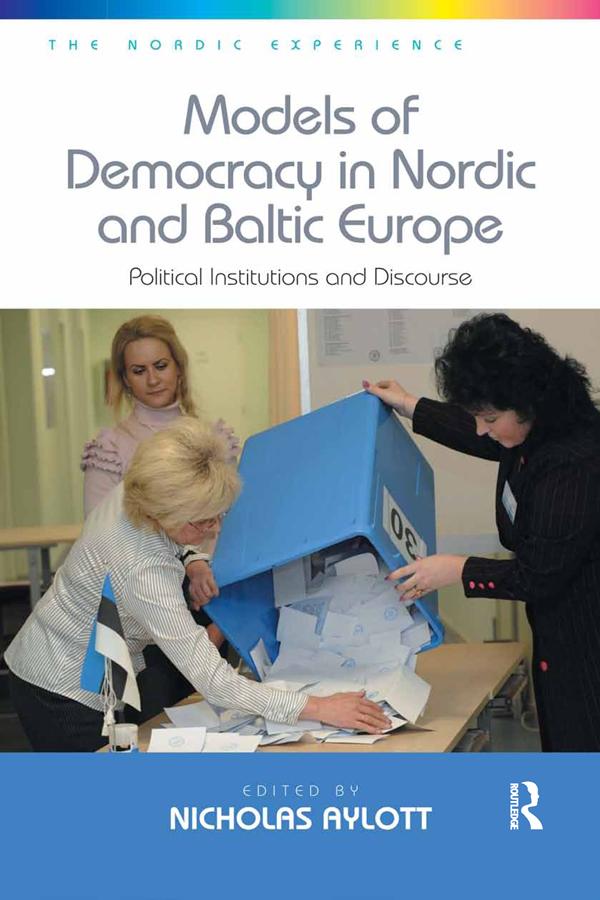
This book explores the ways in which representative democracy works in two neighbouring collections of European states: the Nordic (Denmark, Finland, Iceland, Norway and Sweden) and the Baltic (Estonia, Latvia and Lithuania). Starting from a Nordic vantage point, contributors explore the extent to which aspects of politics function similarly or dissimilarly across the two groups of democratic states, acknowledging the differences in models of democracy that occur within each group. Authors explore the possibility that some of the apparently successful institutional features of Nordic politics have somehow influenced politics in the Baltic states, despite the considerable contextual differences between the two groups. The Nordic-Baltic comparison is particularly worthy of study, given the comparative stability of the Nordic democracies and the half century of occupation by a totalitarian dictatorship that the Baltic states endured. The central, guiding questions are: how does political representation work in countries that have a lot in common, but also a few significant contextual dissimilarities; and what, if any, relationships between the respective styles of democracy can be identified? Using a variety of theories, perspectives and methods, the empirical studies that populate the book seek to offer reflections on these questions.
Betal enkelt med kort, Klarna, Apple Pay eller Google Pay. Ikke fornøyd? Du har alltid 14 dagers angrerett. Les mer i våre vilkår. Har du spørsmål, send oss en e-post på hello@memmo.org.
Memmo gjør det enklere å studere – uansett hvor du er i verden. Hos oss samler du pensumbøker og smarte studieverktøy på ett og samme sted: sammendrag, quizer, podkaster og flashcards. Og så Ted, din studiekompis som svarer på alt du lurer på. Over 50 000 studenter studerer allerede her – bygget for at du skal lære raskere og stresse mindre.
Du vil kanskje også like
Kjøp boken0