
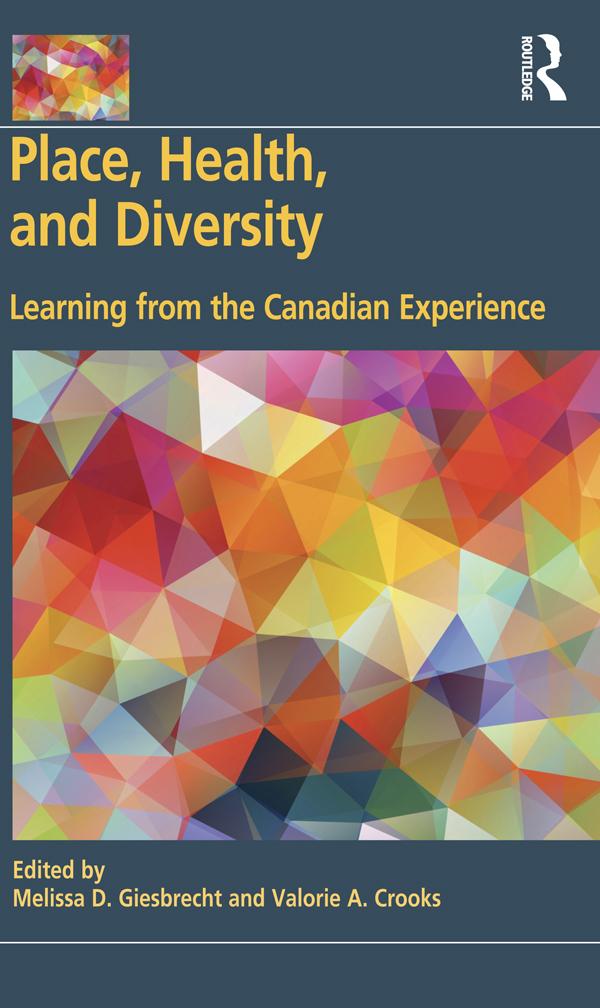
Although health equity and diversity-focussed research has begun to gain momentum, there is still a paucity of research from health geographers that explicitly explores how geographic factors, such as place, space, scale, community, and location, inform multiple axes of difference. Such axes can include residential location, age, sex, gender, race/ethnicity, culture, religion, socio-economic status, marital status, sexual orientation, education level, and immigration status. Specifically focussing on Canada’s rapidly changing society, which is becoming increasingly pluralized and diverse, this book examines the place-health-diversity intersection in this national context. Health geographers are well positioned to offer a valuable contribution to diversity-focussed research because place is inextricably linked to differential experiences of health. For example, access to health care and health promoting services and resources is largely influenced by where one is physically and socially situated within the web of diversity. Furthermore, applying geographic concepts like place, in both the physical and social sense, allows researchers to explore multiple axes of difference simultaneously. Such geographic perspectives, as presented in this book, offer new insights into what makes diverse people, in diverse places, with access to diverse resources (un)healthy in different ways in Canada and beyond.
Betal enkelt med kort, Klarna, Apple Pay eller Google Pay. Ikke fornøyd? Du har alltid 14 dagers angrerett. Les mer i våre vilkår. Har du spørsmål, send oss en e-post på hello@memmo.org.
Memmo gjør det enklere å studere – uansett hvor du er i verden. Hos oss samler du pensumbøker og smarte studieverktøy på ett og samme sted: sammendrag, quizer, podkaster og flashcards. Og så Ted, din studiekompis som svarer på alt du lurer på. Over 50 000 studenter studerer allerede her – bygget for at du skal lære raskere og stresse mindre.
Du vil kanskje også like
Kjøp boken0