
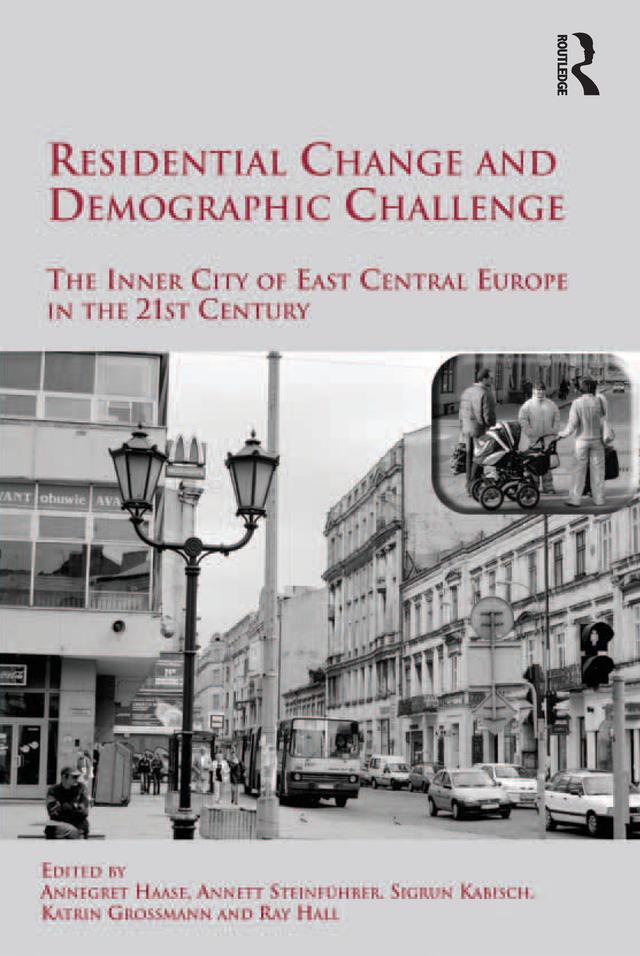
Going beyond the assumption that East Central European cities are still 'in transition' this book draws on the postsocialism paradigm to ask new questions about the impact of demographic change on residential developments in this region. Focussing on four second-order cities in this region, it examines Gdansk and Lódz in Poland and Brno and Ostrava in the Czech Republic as examples and deals with the nexus between urban development and demographic change for the context of East Central European cities. It provides a framework for linking urban and demographic research. It discusses how residential areas and urban developments cope with changes in population development, household types and different forms of in- and out-migration and goes on to explore parallels and differences in comparison with broader European patterns. This book will be useful to academics of urban planning and development especially in transition areas, Central and Eastern European studies, demographics and population studies, and sociology/social exclusion.
Sider: 376
Kategori: Arkitektur & Stadsplanering
e-ISBN: 9781317065371
Fraktvekt: 1.2 kg
Sendes innen: 1-2 dager
Betal enkelt med kort, Klarna, Apple Pay eller Google Pay. Ikke fornøyd? Du har alltid 14 dagers angrerett. Les mer i våre vilkår. Har du spørsmål, send oss en e-post på hello@memmo.org.
Memmo gjør det enklere å studere – uansett hvor du er i verden. Hos oss samler du pensumbøker og smarte studieverktøy på ett og samme sted: sammendrag, quizer, podkaster og flashcards. Og så Ted, din studiekompis som svarer på alt du lurer på. Over 50 000 studenter studerer allerede her – bygget for at du skal lære raskere og stresse mindre.
Du vil kanskje også like
Kjøp boken0