
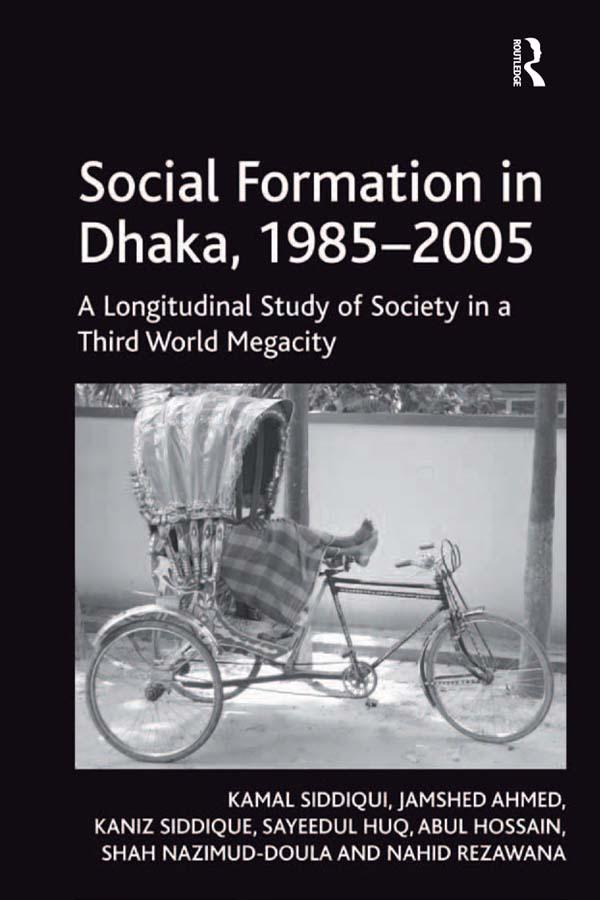
By the middle of the twenty-first century, more than fifty per cent of the world's population will live in an urban environment. Most of this new urban growth will take place in Asia and Africa, yet most governments in these two continents seem woefully unprepared for the challenges they will face in providing their urban citizens with the basic services and security from poverty, environmental degradation and crime. It is in this context that in-depth studies which lay bare the contours and characteristics of society and institutions in the urban setting of Third World countries assume importance and urgency. Most studies on urbanisation in developing countries concentrate on slums and shanty towns in isolation from the rest of the society. By contrast, Social Formation in Dhaka, 1985-2005 analyses urbanisation and urban society in a holistic manner, connecting the poor with the non-poor and delineating the change agents of the city. As the first longitudinal study of the social structure of any Third World Megacity, this book will be of interest to urban sociologists, policy-makers, NGOS, and researchers engaged in understanding the development in cities in the global south.
Betal enkelt med kort, Klarna, Apple Pay eller Google Pay. Ikke fornøyd? Du har alltid 14 dagers angrerett. Les mer i våre vilkår. Har du spørsmål, send oss en e-post på hello@memmo.org.
Memmo gjør det enklere å studere – uansett hvor du er i verden. Hos oss samler du pensumbøker og smarte studieverktøy på ett og samme sted: sammendrag, quizer, podkaster og flashcards. Og så Ted, din studiekompis som svarer på alt du lurer på. Over 50 000 studenter studerer allerede her – bygget for at du skal lære raskere og stresse mindre.
Du vil kanskje også like
Kjøp boken0