
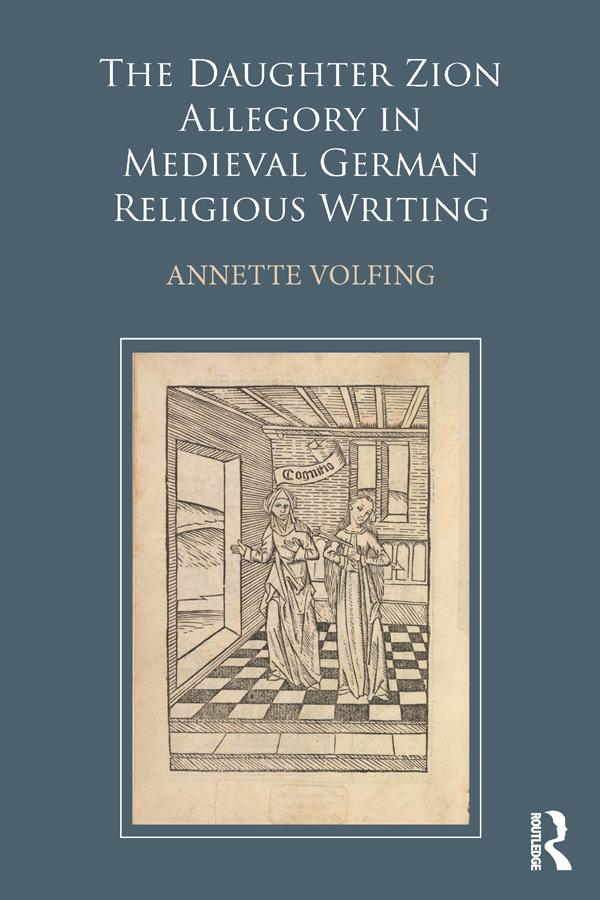
The Daughter Zion allegory represents a particular narrative articulation of the paradigm of bridal mysticism deriving from the Song of Songs, the core element of which is the quest of Daughter Zion for a worthy object of love. Examining medieval German religious writing (verse and prose) and Dutch prose works, Annette Volfing shows that this storyline provides an excellent springboard for investigating key aspects of medieval religious and literary culture. In particular, she argues, the allegory lends itself to an exploration of the medieval sense of self; of the scope of human agency within the mystical encounter; of the gendering of the religious subject; of conceptions of space and enclosure; and of fantasies of violence and aggression. Volfing suggests that Daughter Zion adaptations increasingly tended to empower the religious subject to seek a more immediate relationship with the divine and to embrace a wider range of emotions: the mediating personifications are gradually eliminated in favour of a model of religious experience in which the human subject engages directly with Christ. Overall, the development of the allegory from the twelfth to the fifteenth centuries marks the striving towards a greater sense of equality and affective reciprocity with the divine, within the context of an erotic union.
Betal enkelt med kort, Klarna, Apple Pay eller Google Pay. Ikke fornøyd? Du har alltid 14 dagers angrerett. Les mer i våre vilkår. Har du spørsmål, send oss en e-post på hello@memmo.org.
Memmo gjør det enklere å studere – uansett hvor du er i verden. Hos oss samler du pensumbøker og smarte studieverktøy på ett og samme sted: sammendrag, quizer, podkaster og flashcards. Og så Ted, din studiekompis som svarer på alt du lurer på. Over 50 000 studenter studerer allerede her – bygget for at du skal lære raskere og stresse mindre.
Du vil kanskje også like
Kjøp boken0