
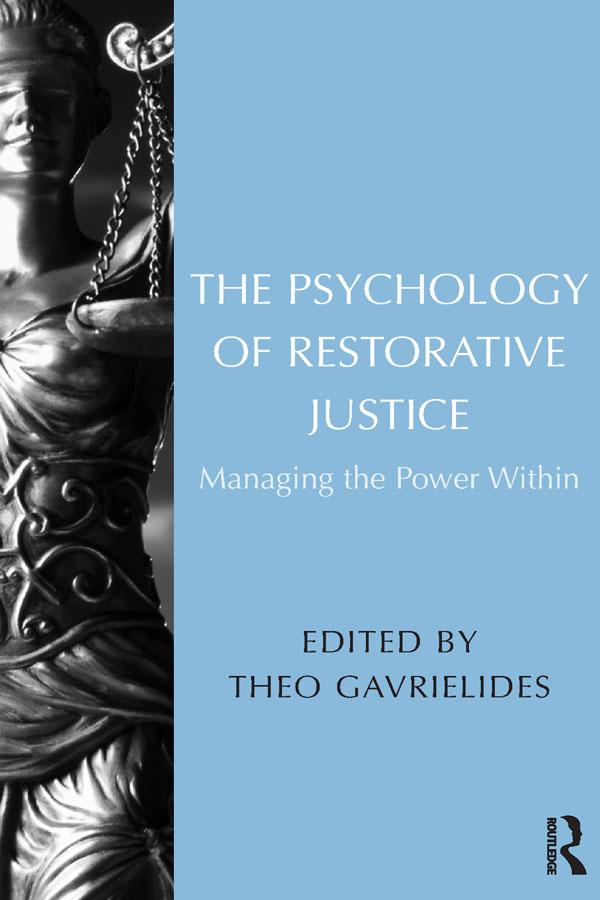
This ground-breaking collection dares to take the next step in the advancement of an autonomous, inter-disciplinary restorative justice field of study. It brings together criminology, social psychology, legal theory, neuroscience, affect-script psychology, sociology, forensic mental health, political sciences, psychology and positive psychology to articulate for the first time a psychological concept of restorative justice. To this end, the book studies the power structures of the restorative justice movement, the very psychology, motivations and emotions of the practitioners who implement it as well as the drivers of its theoreticians and researchers. Furthermore, it examines the strengths and weakness of our own societies and the communities that are called to participate as parties in restorative justice. Their own biases, hunger for power and control, fears and hopes are investigated. The psychology and dynamics between those it aims to reach as well as those who are funding it, including policy makers and politicians, are looked into. All these questions lead to creating an understanding of the psychology of restorative justice. The book is essential reading for academics, researchers, policymakers, practitioners and campaigners.
Betal enkelt med kort, Klarna, Apple Pay eller Google Pay. Ikke fornøyd? Du har alltid 14 dagers angrerett. Les mer i våre vilkår. Har du spørsmål, send oss en e-post på hello@memmo.org.
Memmo gjør det enklere å studere – uansett hvor du er i verden. Hos oss samler du pensumbøker og smarte studieverktøy på ett og samme sted: sammendrag, quizer, podkaster og flashcards. Og så Ted, din studiekompis som svarer på alt du lurer på. Over 50 000 studenter studerer allerede her – bygget for at du skal lære raskere og stresse mindre.
Du vil kanskje også like
Kjøp boken0