
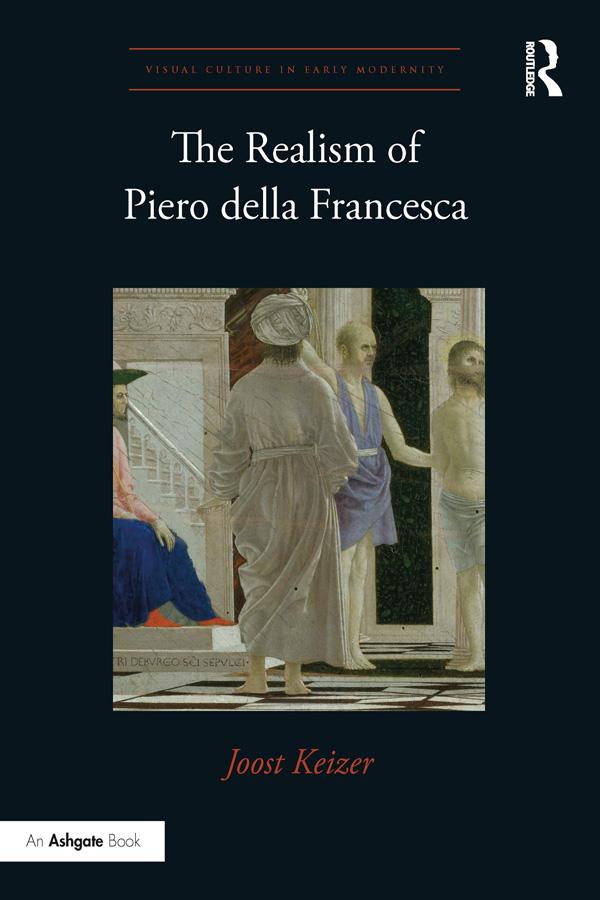
The fifteenth-century Italian artist Piero della Francesca painted a familiar world. Roads wind through hilly landscapes, run past farms, sheds, barns, and villages. This is the world in which Piero lived. At the same time, Piero’s paintings depict a world that is distant. The subjects of his pictures are often Christian and that means that their setting is the Holy Land, a place Piero had never visited.
The Realism of Piero della Francesca studies this paradoxical aspect of Piero’s art. It tells the story of an artist who could think of the local churches, palaces, and landscapes in and around his hometown of Sansepolcro as miraculously built replicas of the monuments of Jerusalem. Piero’s application of perspective, to which he devoted a long treatise, was meant to convince his contemporaries that his paintings report on things that Piero actually observed. Piero’s methodical way of painting seems to have offered no room for his own fantasy. His art looks deliberately styleless.
This book uncovers a world in which painting needed to validate itself by cultivating the illusion that it reported on things observed instead of things imagined by the artist. Piero’s painting claimed truth in a world of increasing uncertainties.
Betal enkelt med kort, Klarna, Apple Pay eller Google Pay. Ikke fornøyd? Du har alltid 14 dagers angrerett. Les mer i våre vilkår. Har du spørsmål, send oss en e-post på hello@memmo.org.
Memmo gjør det enklere å studere – uansett hvor du er i verden. Hos oss samler du pensumbøker og smarte studieverktøy på ett og samme sted: sammendrag, quizer, podkaster og flashcards. Og så Ted, din studiekompis som svarer på alt du lurer på. Over 50 000 studenter studerer allerede her – bygget for at du skal lære raskere og stresse mindre.