
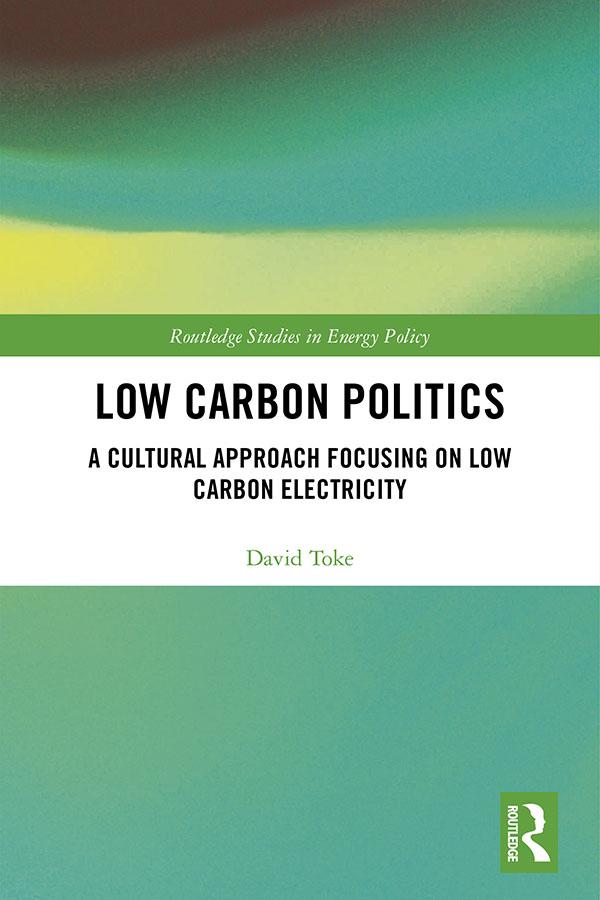
Low Carbon Politics focuses on how policies and institutions have influenced the deployment of renewable energy and nuclear power in the electricity sector. Cultural theory is used to analyse this.
Egalitarian pressures have had a profound influence on technological outcomes, not merely in securing the deployment of renewable energy but also in increasing the costs of nuclear power. Whereas in the 1970s it might have been expected that individualist, market based pressures allied to dominant hierarchies would deliver nuclear power as the main response to problems associated with fossil fuels, a surprising combination has emerged. Egalitarian and individualist pressures are, together, leading to increasing levels of deployment of renewable energy. This work finds that electricity monopolies tend to favour nuclear power whereas competitive arrangements are more likely to lead to more renewable energy being deployed. It covers developments in a number of countries including USA, UK, China, South Africa and also Germany and Denmark.
This book will be of great relevance to students, academics and policymakers with an interest in energy policy, low carbon politics and climate change.
Betal enkelt med kort, Klarna, Apple Pay eller Google Pay. Ikke fornøyd? Du har alltid 14 dagers angrerett. Les mer i våre vilkår. Har du spørsmål, send oss en e-post på hello@memmo.org.
Memmo gjør det enklere å studere – uansett hvor du er i verden. Hos oss samler du pensumbøker og smarte studieverktøy på ett og samme sted: sammendrag, quizer, podkaster og flashcards. Og så Ted, din studiekompis som svarer på alt du lurer på. Over 50 000 studenter studerer allerede her – bygget for at du skal lære raskere og stresse mindre.