
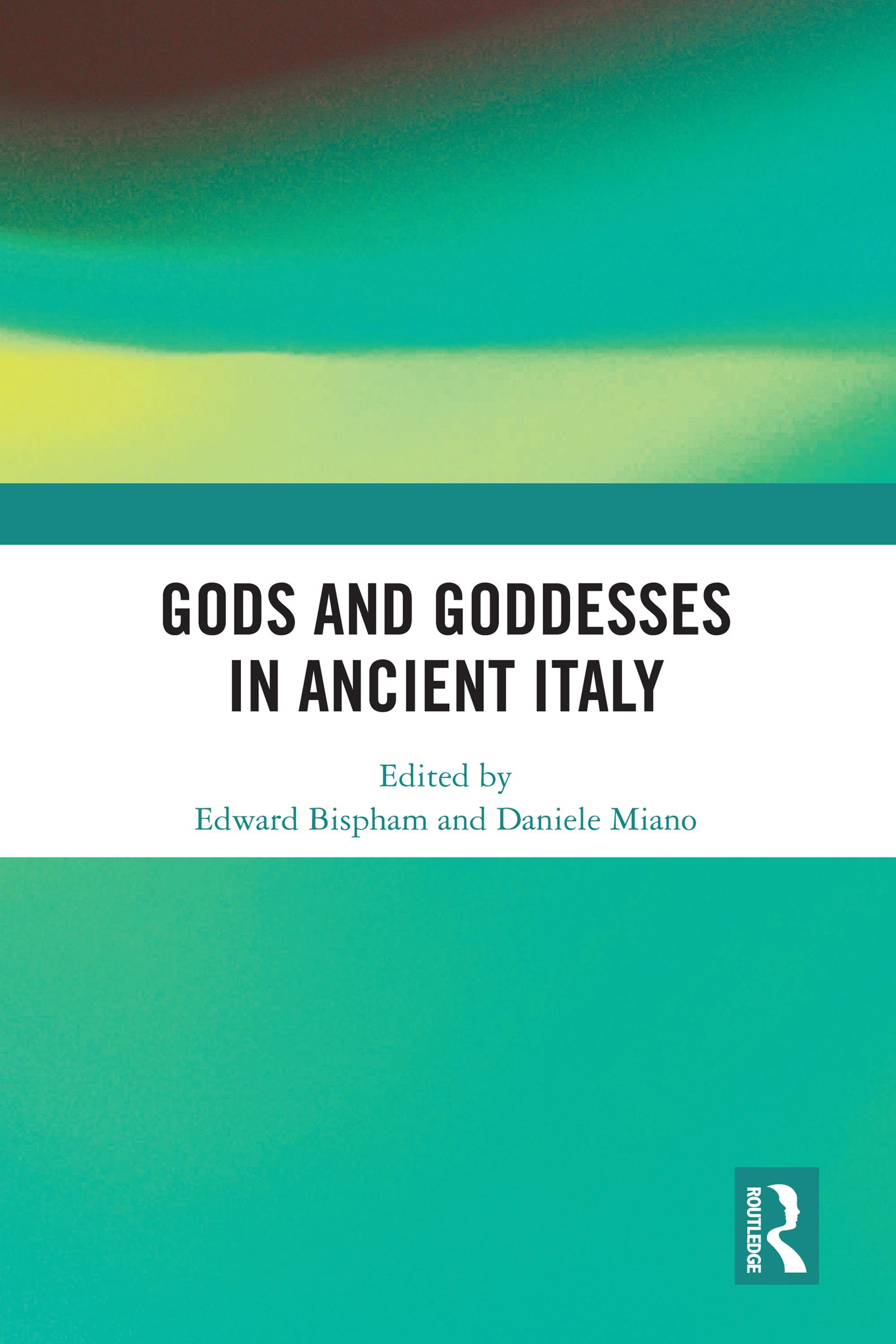
This collection explores the multifaceted nature of the gods and goddesses worshipped in ancient Italy. It examines Italic, Etruscan, and Latin deities in context and in the material remains, and also in the Greco-Roman written record and later scholarship which drew on these texts.
Many deities were worshipped in ancient Italy by different individuals and communities, using different languages, at different sanctuaries, and for very different reasons. This multiplicity creates challenges for modern historians of antiquity at different levels. How do we cope with it? Can we reduce it to the conceptual unity necessary to provide a meaningful historical interpretation? To what extent can deities named in different languages be considered the equivalent of one another (e.g. Artemis and Diana)? How can we interpret the visual representations of deities that are not accompanied by written text? Can we reconstruct what these deities meant to their local worshippers although the overwhelming majority of our sources were written by Romans and Greeks? The contributors of this book, a group of ten scholars from the UK, Italy, France, and Poland, offer different perspectives on these problems, each concentrating on a particular god or goddess.
Gods and Goddesses in Ancient Italy offers an invaluable resource for anyone working on ancient Roman and Italian religion.
Betal enkelt med kort, Klarna, Apple Pay eller Google Pay. Ikke fornøyd? Du har alltid 14 dagers angrerett. Les mer i våre vilkår. Har du spørsmål, send oss en e-post på hello@memmo.org.
Memmo gjør det enklere å studere – uansett hvor du er i verden. Hos oss samler du pensumbøker og smarte studieverktøy på ett og samme sted: sammendrag, quizer, podkaster og flashcards. Og så Ted, din studiekompis som svarer på alt du lurer på. Over 50 000 studenter studerer allerede her – bygget for at du skal lære raskere og stresse mindre.