
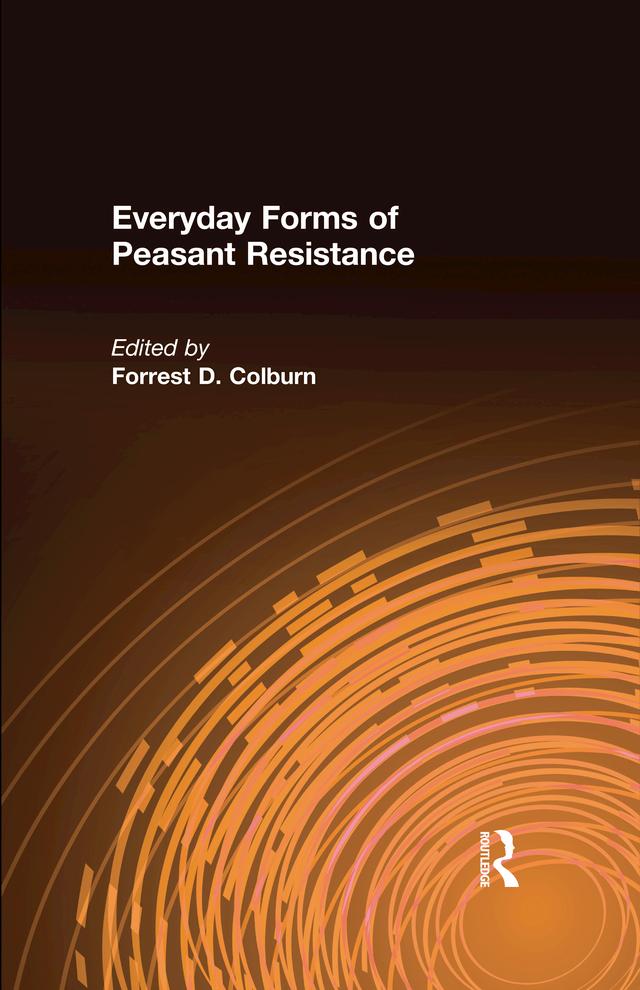
Peasant rebellions are uncommon. "Everyday Forms of Peasant Resistance" explores peasants' foot dragging, feigned ingorance, false compliance, manipulation, flight, slander, theft, arson, sabotage, and similar prosaic forms of struggle. These kinds of resistance stop well short of collective defiance, a strategy usually suicidal for the subordinate. The central argument about peasant resistance is presented in the opening chapter by James Scott in which he summarizes and extends the thesis of his book on Malaysia's peasantry, "Weapons of the Weak". Scott's ideas are employed and refined in the ensuing seven country studies of peasant resistance: Poland, India, Egypt, Colombia, China, Nicaragua and Zimbabwe.
Betal enkelt med kort, Klarna, Apple Pay eller Google Pay. Ikke fornøyd? Du har alltid 14 dagers angrerett. Les mer i våre vilkår. Har du spørsmål, send oss en e-post på hello@memmo.org.
Memmo gjør det enklere å studere – uansett hvor du er i verden. Hos oss samler du pensumbøker og smarte studieverktøy på ett og samme sted: sammendrag, quizer, podkaster og flashcards. Og så Ted, din studiekompis som svarer på alt du lurer på. Over 50 000 studenter studerer allerede her – bygget for at du skal lære raskere og stresse mindre.
Du vil kanskje også like
Kjøp boken0