
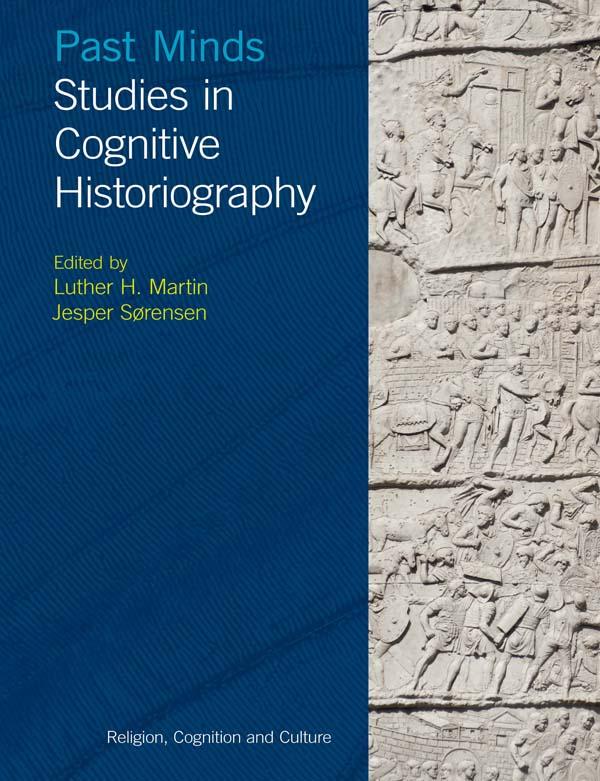
How do historians understand the minds, motivations, intentions of historical agents? What might evolutionary and cognitive theorizing contribute to this work? What is the relation between natural and cultural history? Historians have been intrigued by such questions ever since publication in 1859 of Darwin's The Origin of Species, itself the historicization of biology. This interest reemerged in the latter part of the twentieth century among a number of biologists, philosophers and historians, reinforced by the new interdisciplinary finding of cognitive scientists about the universal capacities of and constraints upon human minds. The studies in this volume, primarily by historians of religion, continue this discussion by focusing on historical examples of ancient religions as well as on the theoretical promises and problems relevant to that study.
Betal enkelt med kort, Klarna, Apple Pay eller Google Pay. Ikke fornøyd? Du har alltid 14 dagers angrerett. Les mer i våre vilkår. Har du spørsmål, send oss en e-post på hello@memmo.org.
Memmo gjør det enklere å studere – uansett hvor du er i verden. Hos oss samler du pensumbøker og smarte studieverktøy på ett og samme sted: sammendrag, quizer, podkaster og flashcards. Og så Ted, din studiekompis som svarer på alt du lurer på. Over 50 000 studenter studerer allerede her – bygget for at du skal lære raskere og stresse mindre.