
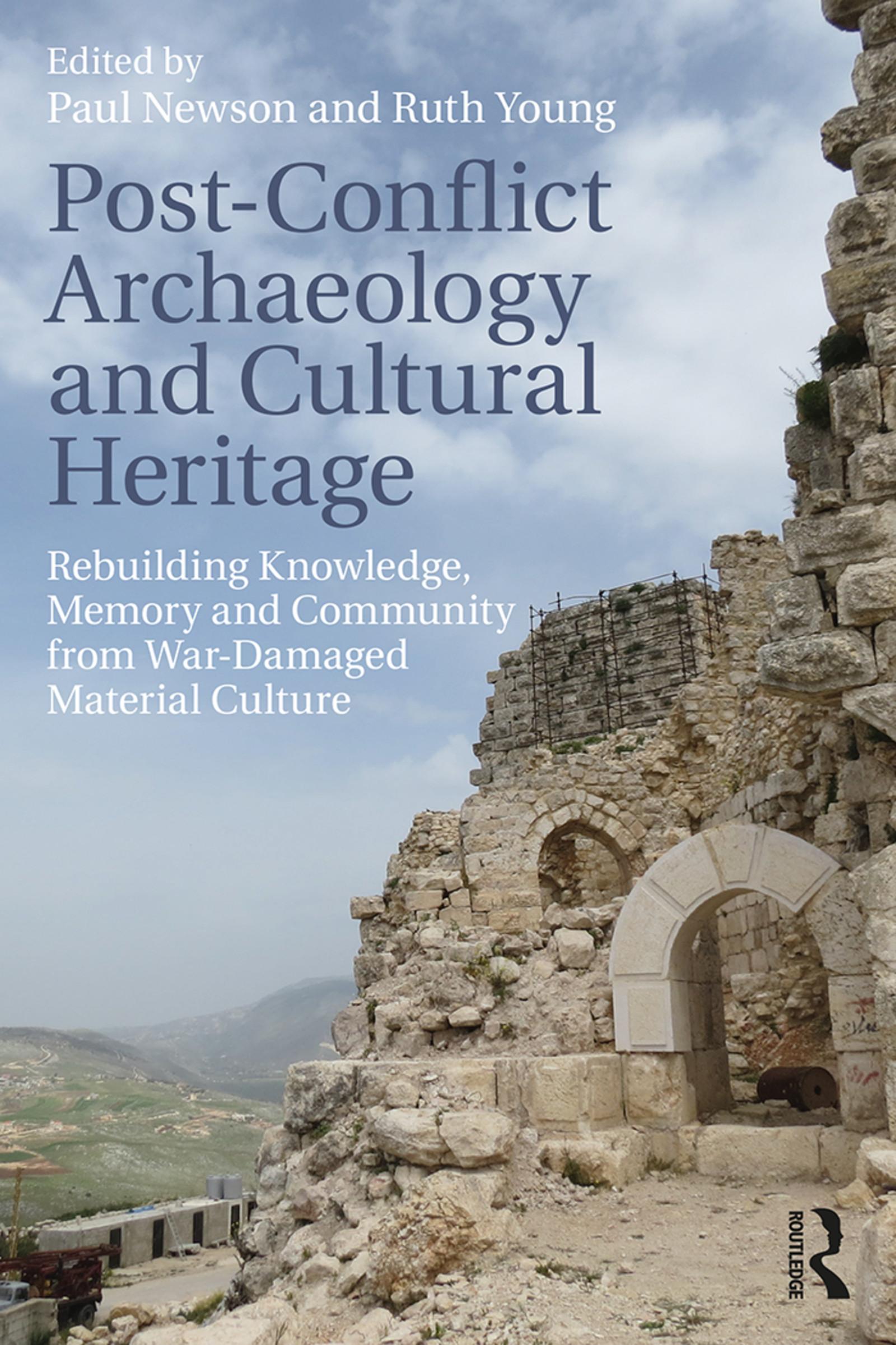
The human cost in any conflict is of course the first care in terms of the reduction, if not the elimination of damage. However, the destruction of archaeology and heritage as a consequence of civil and international wars is also of major concern, and the irreversible loss of monuments and sites through conflict has been increasingly discussed and documented in recent years.
Post-Conflict Archaeology and Cultural Heritage draws together a series of papers from archaeological and heritage professionals seeking positive, pragmatic and practical ways to deal with conflict-damaged sites. For instance, by showing that conflict-damaged cultural heritage and archaeological sites are a valuable resource rather than an inevitable casualty of war, and suggesting that archaeologists use their skills and knowledge to bring communities together, giving them ownership of, and identification with, their cultural heritage.
The book is a mixture of the discussion of problems, suggested planning solutions and case studies for both archaeologists and heritage managers. It will be of interest to heritage professionals, archaeologists and anyone working with post-conflict communities, as well as anthropology, archaeology, and heritage academics and their students at a range of levels.
Betal enkelt med kort, Klarna, Apple Pay eller Google Pay. Ikke fornøyd? Du har alltid 14 dagers angrerett. Les mer i våre vilkår. Har du spørsmål, send oss en e-post på hello@memmo.org.
Memmo gjør det enklere å studere – uansett hvor du er i verden. Hos oss samler du pensumbøker og smarte studieverktøy på ett og samme sted: sammendrag, quizer, podkaster og flashcards. Og så Ted, din studiekompis som svarer på alt du lurer på. Over 50 000 studenter studerer allerede her – bygget for at du skal lære raskere og stresse mindre.