
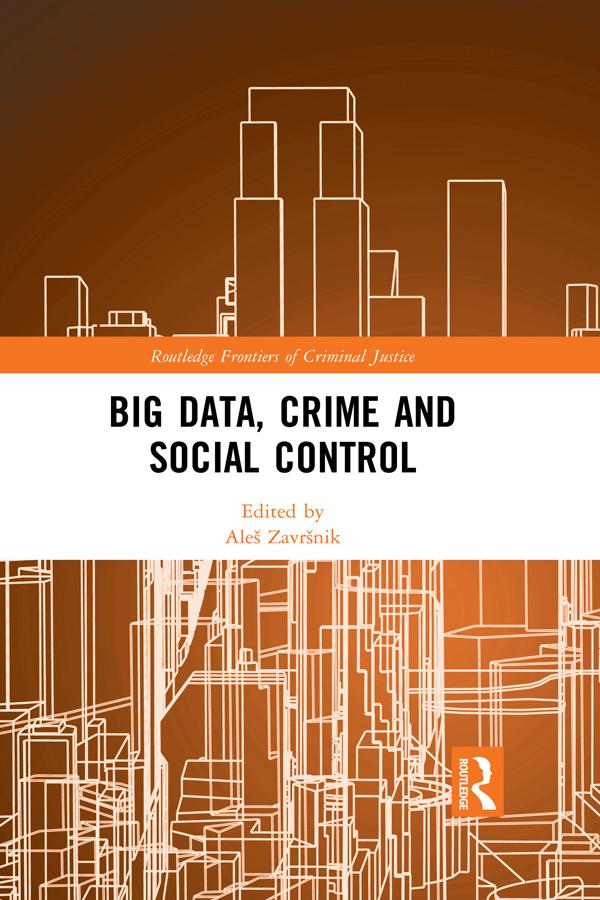
From predictive policing to self-surveillance to private security, the potential uses to of big data in crime control pose serious legal and ethical challenges relating to privacy, discrimination, and the presumption of innocence. The book is about the impacts of the use of big data analytics on social and crime control and on fundamental liberties.
Drawing on research from Europe and the US, this book identifies the various ways in which law and ethics intersect with the application of big data in social and crime control, considers potential challenges to human rights and democracy and recommends regulatory solutions and best practice. This book focuses on changes in knowledge production and the manifold sites of contemporary surveillance, ranging from self-surveillance to corporate and state surveillance. It tackles the implications of big data and predictive algorithmic analytics for social justice, social equality, and social power: concepts at the very core of crime and social control.
This book will be of interest to scholars and students of criminology, sociology, politics and socio-legal studies.
Betal enkelt med kort, Klarna, Apple Pay eller Google Pay. Ikke fornøyd? Du har alltid 14 dagers angrerett. Les mer i våre vilkår. Har du spørsmål, send oss en e-post på hello@memmo.org.
Memmo gjør det enklere å studere – uansett hvor du er i verden. Hos oss samler du pensumbøker og smarte studieverktøy på ett og samme sted: sammendrag, quizer, podkaster og flashcards. Og så Ted, din studiekompis som svarer på alt du lurer på. Over 50 000 studenter studerer allerede her – bygget for at du skal lære raskere og stresse mindre.