
Learn How to Use Growth Curve Analysis with Your Time Course Data
An increasingly prominent statistical tool in the behavioral sciences, multilevel regression offers a statistical framework for analyzing longitudinal or time course data. It also provides a way to quantify and analyze individual differences, such as developmental and neuropsychological, in the context of a model of the overall group effects. To harness the practical aspects of this useful tool, behavioral science researchers need a concise, accessible resource that explains how to implement these analysis methods.
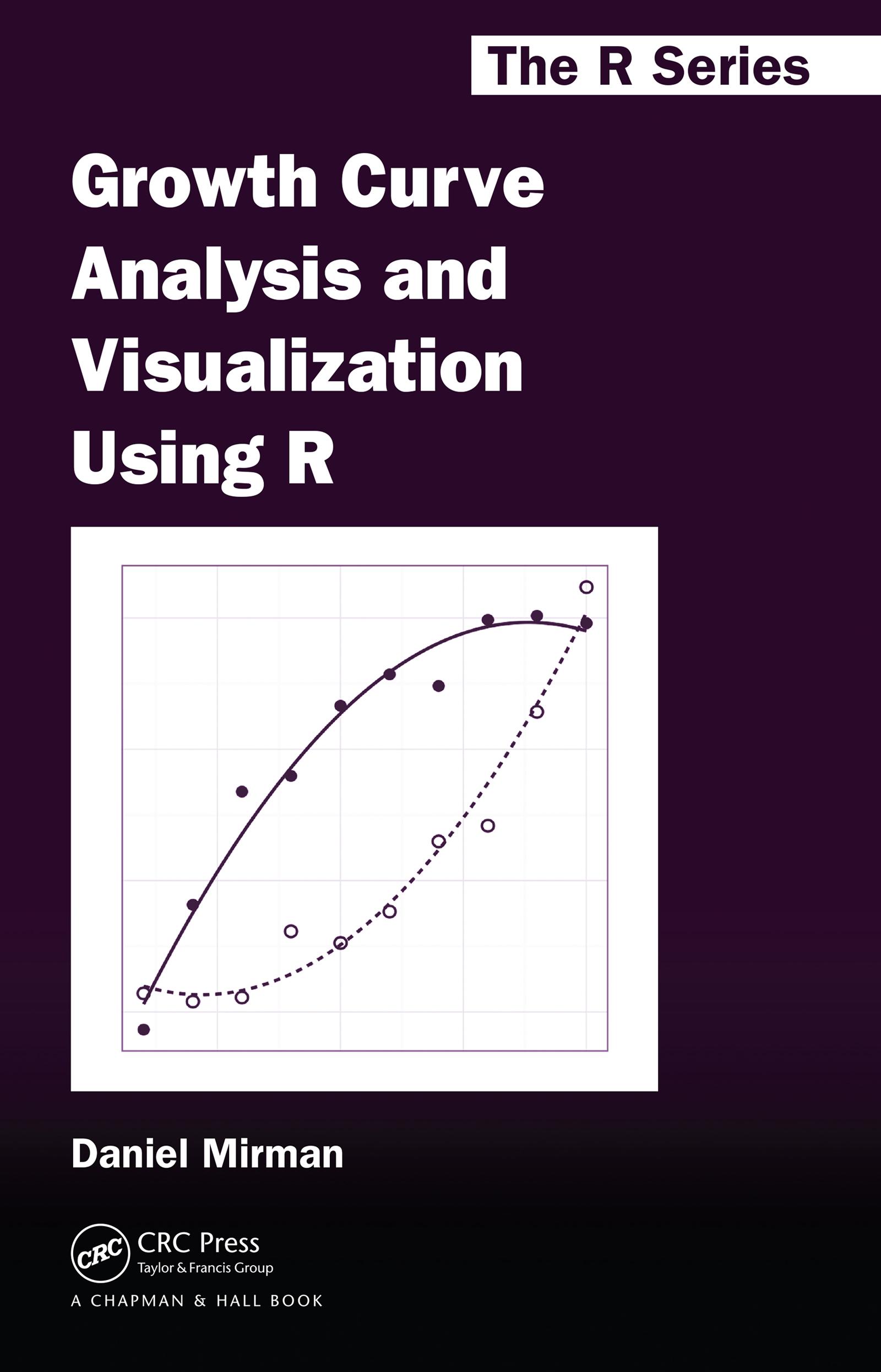
Growth Curve Analysis and Visualization Using R provides a practical, easy-to-understand guide to carrying out multilevel regression/growth curve analysis (GCA) of time course or longitudinal data in the behavioral sciences, particularly cognitive science, cognitive neuroscience, and psychology. With a minimum of statistical theory and technical jargon, the author focuses on the concrete issue of applying GCA to behavioral science data and individual differences.
The book begins with discussing problems encountered when analyzing time course data, how to visualize time course data using the ggplot2 package, and how to format data for GCA and plotting. It then presents a conceptual overview of GCA and the core analysis syntax using the lme4 package and demonstrates how to plot model fits. The book describes how to deal with change over time that is not linear, how to structure random effects, how GCA and regression use categorical predictors, and how to conduct multiple simultaneous comparisons among different levels of a factor. It also compares the advantages and disadvantages of approaches to implementing logistic and quasi-logistic GCA and discusses how to use GCA to analyze individual differences as both fixed and random effects. The final chapter presents the code for all of the key examples along with samples demonstrating how to report GCA results.
Throughout the book, R code illustrates how to implement the analyses and generate the graphs. Each chapter ends with exercises to test your understanding. The example datasets, code for solutions to the exercises, and supplemental code and examples are available on the author’s website.
Betal enkelt med kort, Klarna, Apple Pay eller Google Pay. Ikke fornøyd? Du har alltid 14 dagers angrerett. Les mer i våre vilkår. Har du spørsmål, send oss en e-post på hello@memmo.org.
Memmo gjør det enklere å studere – uansett hvor du er i verden. Hos oss samler du pensumbøker og smarte studieverktøy på ett og samme sted: sammendrag, quizer, podkaster og flashcards. Og så Ted, din studiekompis som svarer på alt du lurer på. Over 50 000 studenter studerer allerede her – bygget for at du skal lære raskere og stresse mindre.