
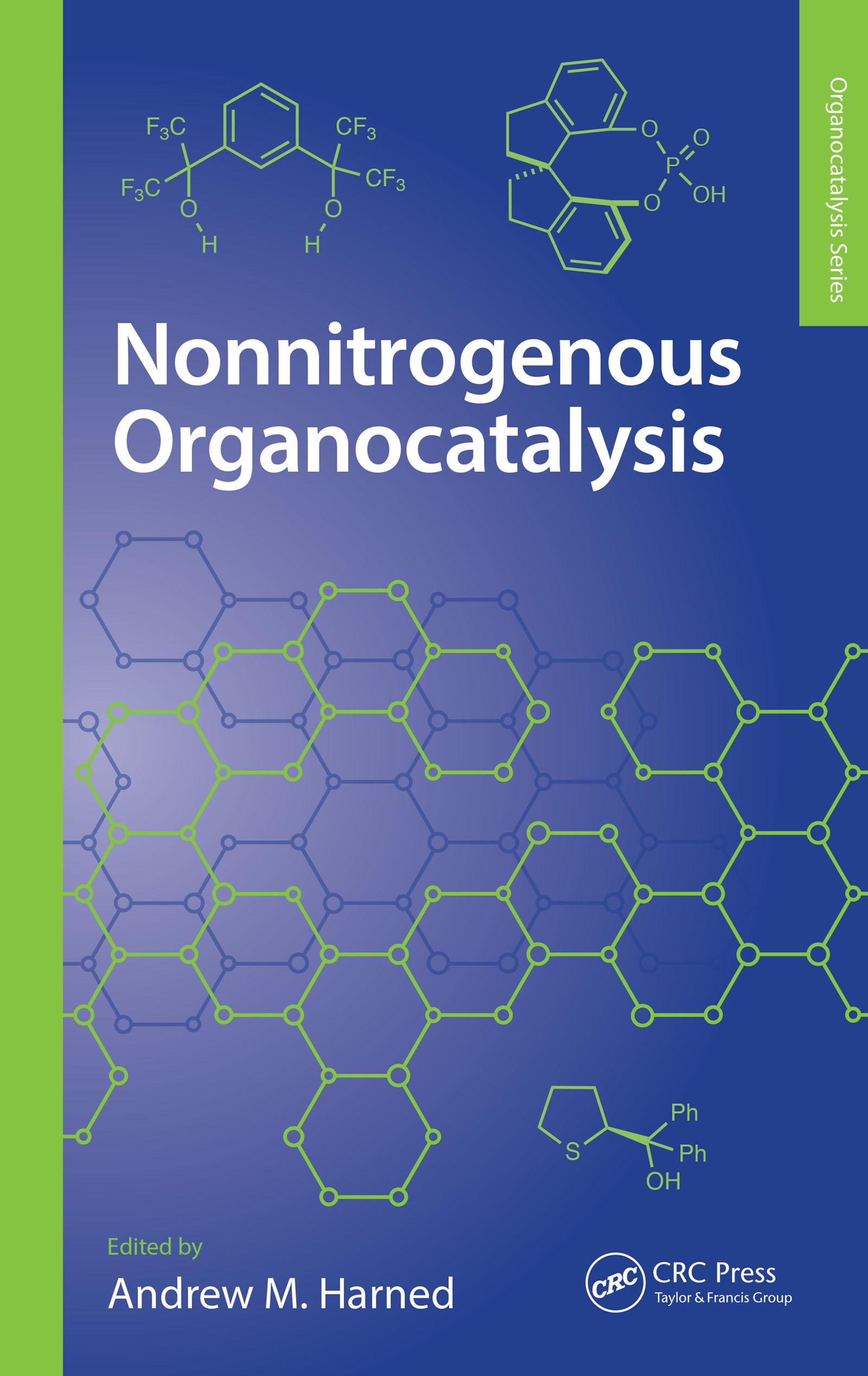
Since the 1990s the synthetic community has shown a growing interest in the development of catalytic reactions that employ entirely organic catalysts – so-called ‘organocatalysts’. With the current emphasis on green chemistry throughout the chemical industry, organocatalysis has become indispensible. In spite of this growth and recognition, there can be a misconception that organocatalysts are only based on nitrogen-containing functional groups (amines, ureas, and quaternary ammonium salts, for example), and are only useful for asymmetric reactions.
Nonnitrogenous Organocatalysis shows that the umbrella of organocatalysis covers other main group elements besides nitrogen, and the coverage is not just limited to asymmetric methods. Many of the catalysts and mechanisms discussed may not have a viable asymmetric variant or cannot be rendered asymmetric at all. This does not make them any less useful, as illustrated in this book.
Betal enkelt med kort, Klarna, Apple Pay eller Google Pay. Ikke fornøyd? Du har alltid 14 dagers angrerett. Les mer i våre vilkår. Har du spørsmål, send oss en e-post på hello@memmo.org.
Memmo gjør det enklere å studere – uansett hvor du er i verden. Hos oss samler du pensumbøker og smarte studieverktøy på ett og samme sted: sammendrag, quizer, podkaster og flashcards. Og så Ted, din studiekompis som svarer på alt du lurer på. Over 50 000 studenter studerer allerede her – bygget for at du skal lære raskere og stresse mindre.