
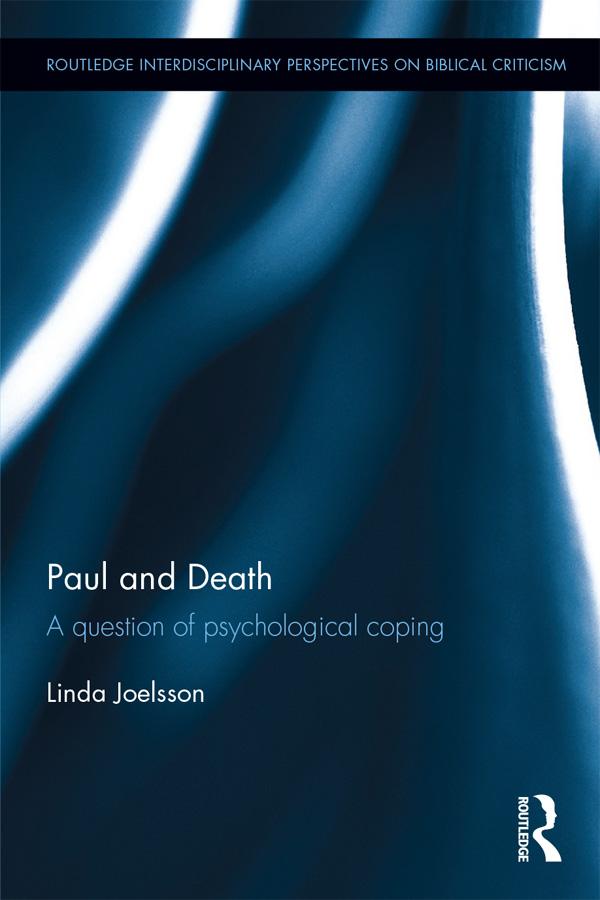
The concept of death, particularly violent death, is prevalent throughout the writings of Paul the Apostle. His letters in the New Testament address this topic from a variety of perspectives, some of which can appear to be almost contradictory. However, this need not be problematic. Paul and Death uses the method of psychological exegesis to show that the different attitudes toward death in Paul’s letters make for a much more coherent discourse if they are seen as an aid to individual and collective psychological coping.
Taking the differences between each of Paul’s letters as its starting point, this study suggests that a variety of coping strategies in relation to death may be beneficial depending on the situation, the person, and the stage of the coping process. Drawing on psychologically-oriented hermeneutic theory, and theories about psychological coping in particular, the author argues that each case of psychological coping must be understood in its historical situation, and as strategies emanating from a specific person’s subjective appraisal.
Combining theology and biblical studies with modern psychology, this book will be of particular interest to academics and students that are studying the relationship between Religion and notions of Death.
Betal enkelt med kort, Klarna, Apple Pay eller Google Pay. Ikke fornøyd? Du har alltid 14 dagers angrerett. Les mer i våre vilkår. Har du spørsmål, send oss en e-post på hello@memmo.org.
Memmo gjør det enklere å studere – uansett hvor du er i verden. Hos oss samler du pensumbøker og smarte studieverktøy på ett og samme sted: sammendrag, quizer, podkaster og flashcards. Og så Ted, din studiekompis som svarer på alt du lurer på. Over 50 000 studenter studerer allerede her – bygget for at du skal lære raskere og stresse mindre.