
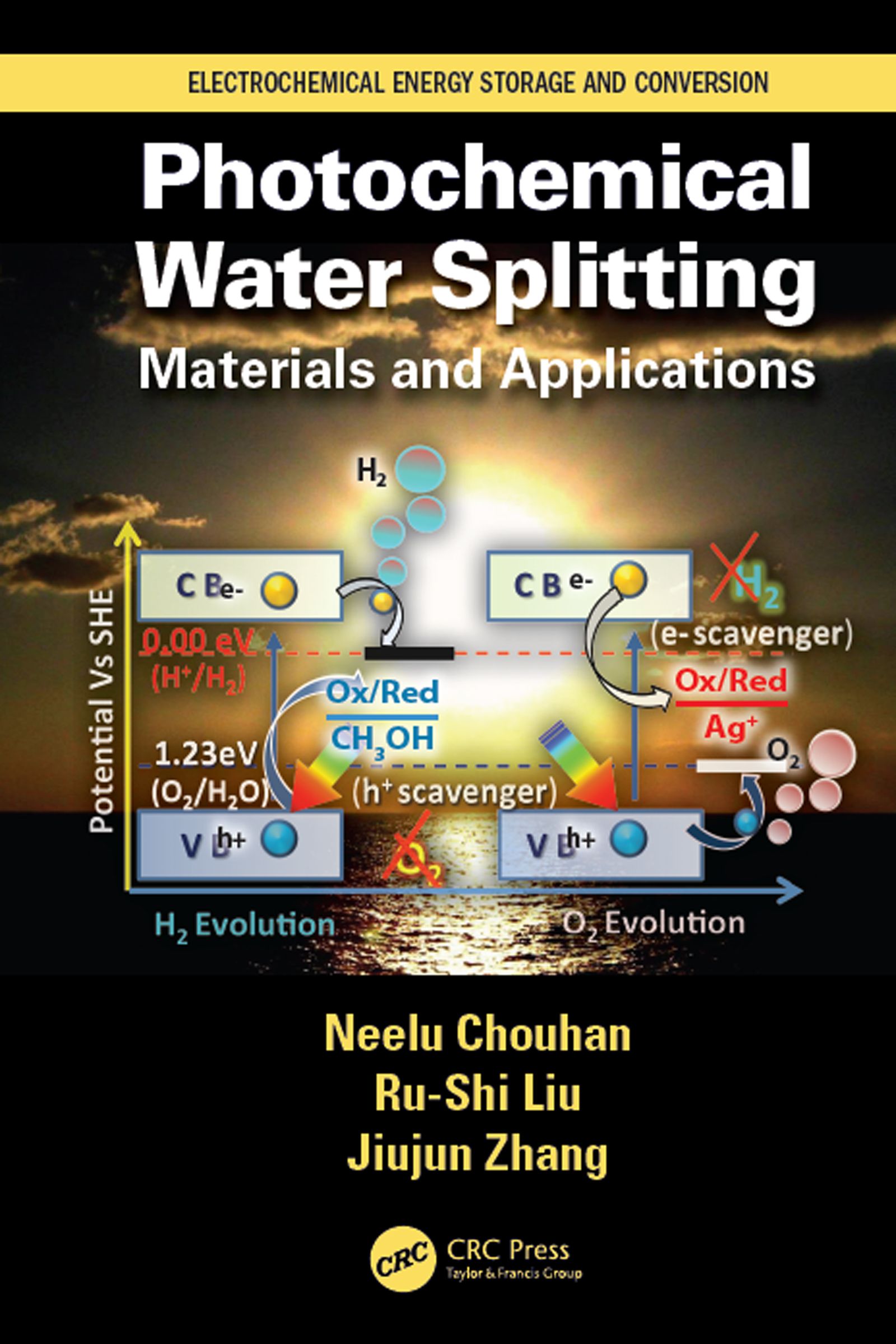
Cleavage of water to its constituents (i.e., hydrogen and oxygen) for production of hydrogen energy at an industrial scale is one of the "holy grails" of materials science. That can be done by utilizing the renewable energy resource i.e. sunlight and photocatalytic material. The sunlight and water are abundant and free of cost available at this planet. But the development of a stable, efficient and cost-effective photocatalytic material to split water is still a great challenge. To develop the effective materials for photocatalytic water splitting, various type of materials with different sizes and structures from nano to giant have been explored that includes metal oxides, metal chalcogenides, carbides, nitrides, phosphides, and so on. Fundamental concepts and state of art materials for the water splitting are also discussed to understand the phenomenon/mechanism behind the photoelectrochemical water splitting. This book gives a comprehensive overview and description of the manufacturing of photocatalytic materials and devices for water splitting by controlling the chemical composition, particle size, morphology, orientation and aspect ratios of the materials. The real technological breakthroughs in the development of the photoactive materials with considerable efficiency, are well conversed to bring out the practical aspects of the technique and its commercialization.
Betal enkelt med kort, Klarna, Apple Pay eller Google Pay. Ikke fornøyd? Du har alltid 14 dagers angrerett. Les mer i våre vilkår. Har du spørsmål, send oss en e-post på hello@memmo.org.
Memmo gjør det enklere å studere – uansett hvor du er i verden. Hos oss samler du pensumbøker og smarte studieverktøy på ett og samme sted: sammendrag, quizer, podkaster og flashcards. Og så Ted, din studiekompis som svarer på alt du lurer på. Over 50 000 studenter studerer allerede her – bygget for at du skal lære raskere og stresse mindre.