
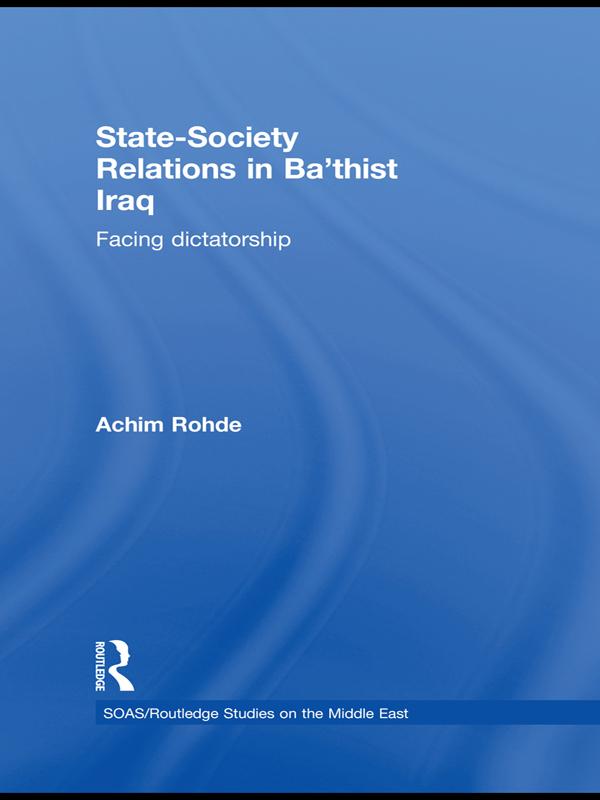
Scholarship on Iraq under the Ba’th regime has traditionally focused on the rule of Saddam Hussein and his narrow inner circle. The centrality of the former president in Iraqi politics until spring 2003 and the tyranny of his regime were evident, and available sources concerning developments inside Iraqi society during that period were scarce.
This book explores whether traditional paradigms of totalitarian rule can be applied to Ba’thist Iraq, closely examining state-society relations and uncovering the nature of the regime and how Iraqis lived with it. The study creates a conceptual framework for understanding the inner dynamics of a dictatorship that encompasses a variety of disciplines - comparative historiography, political science, literary and art criticism, and gender studies. Drawing on a comparative reading of the historiography of other regimes commonly perceived as totalitarian dictatorships, particularly Nazi Germany, the author looks beyond the spheres of state politics, economy and jurisdiction to also include the so called ‘soft issues’ of social norms, cultural and ideological production. By interpreting recent Iraqi history along such lines, the author demonstrates how cross-regional comparative perspectives and an interdisciplinary approach can contribute to the study of Iraq.
Betal enkelt med kort, Klarna, Apple Pay eller Google Pay. Ikke fornøyd? Du har alltid 14 dagers angrerett. Les mer i våre vilkår. Har du spørsmål, send oss en e-post på hello@memmo.org.
Memmo gjør det enklere å studere – uansett hvor du er i verden. Hos oss samler du pensumbøker og smarte studieverktøy på ett og samme sted: sammendrag, quizer, podkaster og flashcards. Og så Ted, din studiekompis som svarer på alt du lurer på. Over 50 000 studenter studerer allerede her – bygget for at du skal lære raskere og stresse mindre.