
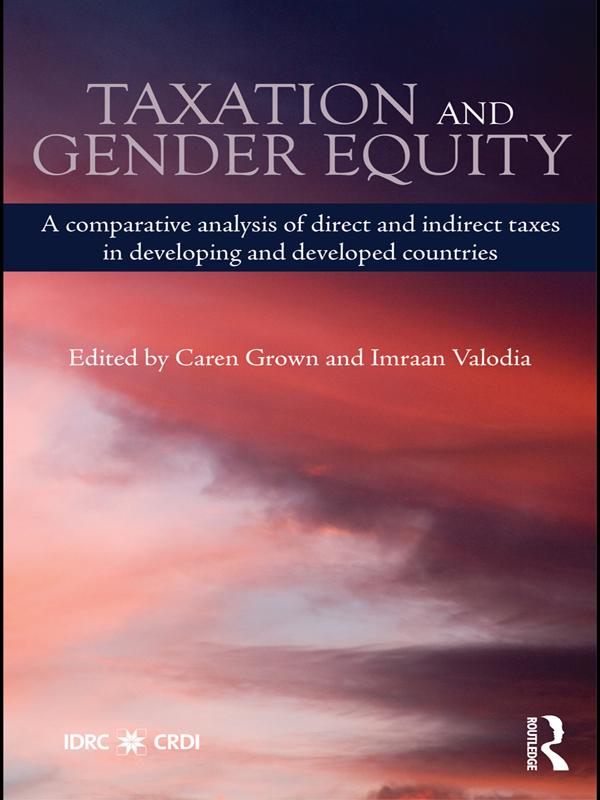
Around the world, there are concerns that many tax codes are biased against women, and that contemporary tax reforms tend to increase the incidence of taxation on the poorest women while failing to generate enough revenue to fund the programs needed to improve these women’s lives. Because taxes are the key source of revenue governments themselves raise, understanding the nature and composition of taxation and current tax reform efforts is key to reducing poverty, providing sufficient revenue for public expenditure, and achieving social justice.
This is the first book to systematically examine gender and taxation within and across countries at different levels of development. It presents original research on the gender dimensions of personal income taxes, and value-added, excise, and fuel taxes in Argentina, Ghana, India, Mexico, Morocco, South Africa, Uganda and the United Kingdom. This book will be of interest to postgraduates and researchers studying Public Finance, International Economics, Development Studies, Gender Studies, and International Relations, among other disciplines.
Betal enkelt med kort, Klarna, Apple Pay eller Google Pay. Ikke fornøyd? Du har alltid 14 dagers angrerett. Les mer i våre vilkår. Har du spørsmål, send oss en e-post på hello@memmo.org.
Memmo gjør det enklere å studere – uansett hvor du er i verden. Hos oss samler du pensumbøker og smarte studieverktøy på ett og samme sted: sammendrag, quizer, podkaster og flashcards. Og så Ted, din studiekompis som svarer på alt du lurer på. Over 50 000 studenter studerer allerede her – bygget for at du skal lære raskere og stresse mindre.