
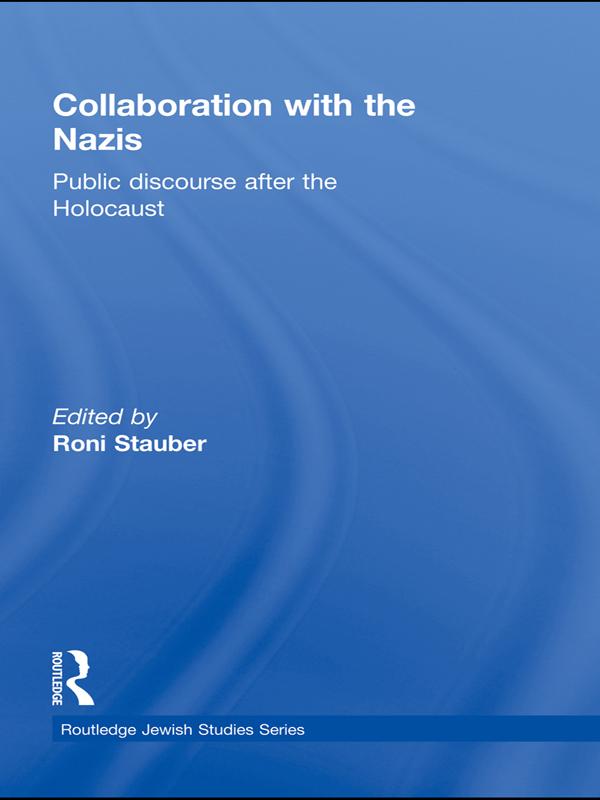
This book examines the changes in representing collaboration, during the Holocaust, especially in the destruction of European Jewry, in the public discourse and the historiography of various countries in Europe that were occupied by the Germans, or were considered, at least during part of the war, as Germany's allies or satellites. In particular, it shows how representations and responses have been conditioned by national and political trends and constraints. As historical background to the issues of postwar collective memory and public discourse, it includes references to and short descriptions of major manifestations of collaboration, chiefly in regards to the Jews, in each of these countries during the war. Whether they were Communist or democratic regimes, the book shows how the sudden burden of the past was suppressed, denied or distorted in various periods. Covering a wide area of both Eastern and Western Europe from different specialist perspectives, this comprehensive study of collaboration in the Holocaust and its aftermath will be a valuable tool for teachers and students in the field of modern European history and Holocaust studies.
Betal enkelt med kort, Klarna, Apple Pay eller Google Pay. Ikke fornøyd? Du har alltid 14 dagers angrerett. Les mer i våre vilkår. Har du spørsmål, send oss en e-post på hello@memmo.org.
Memmo gjør det enklere å studere – uansett hvor du er i verden. Hos oss samler du pensumbøker og smarte studieverktøy på ett og samme sted: sammendrag, quizer, podkaster og flashcards. Og så Ted, din studiekompis som svarer på alt du lurer på. Over 50 000 studenter studerer allerede her – bygget for at du skal lære raskere og stresse mindre.