
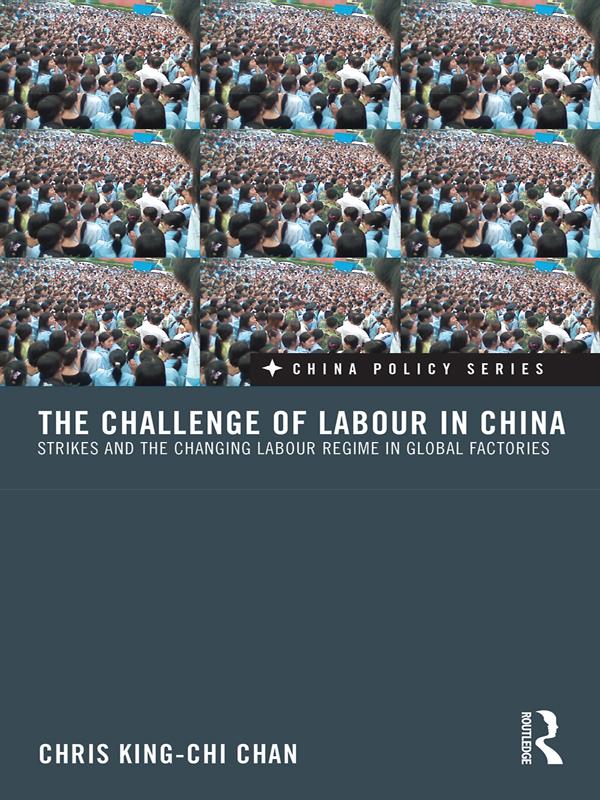
China’s economic success has been founded partly on relatively cheap labour, especially in the export industries. In recent years, however, there has been growing concern about wages and labour standards in China. This book examines how wages are bargained, fought over and determined in China, by exploring how the pattern of labour conflict has changed over time since the 1970s. It focuses in particular on the city of Shenzhen where labour conflict and workers’ protests have been especially prevalent. This book includes a detailed account of the transformation of labour relations and labour policy in China more broadly during 2004 to 2009, a period when there have been significant changes in the labour market, labour regulation and labour relations. The author argues that these recent developments have brought to the fore the class basis of workers’ protest in China and have thoroughly undermined the post-Marxist analysis of identity politics. The book makes an invaluable contribution to studies on industry and labour, as well as Chinese studies.
Betal enkelt med kort, Klarna, Apple Pay eller Google Pay. Ikke fornøyd? Du har alltid 14 dagers angrerett. Les mer i våre vilkår. Har du spørsmål, send oss en e-post på hello@memmo.org.
Memmo gjør det enklere å studere – uansett hvor du er i verden. Hos oss samler du pensumbøker og smarte studieverktøy på ett og samme sted: sammendrag, quizer, podkaster og flashcards. Og så Ted, din studiekompis som svarer på alt du lurer på. Over 50 000 studenter studerer allerede her – bygget for at du skal lære raskere og stresse mindre.