
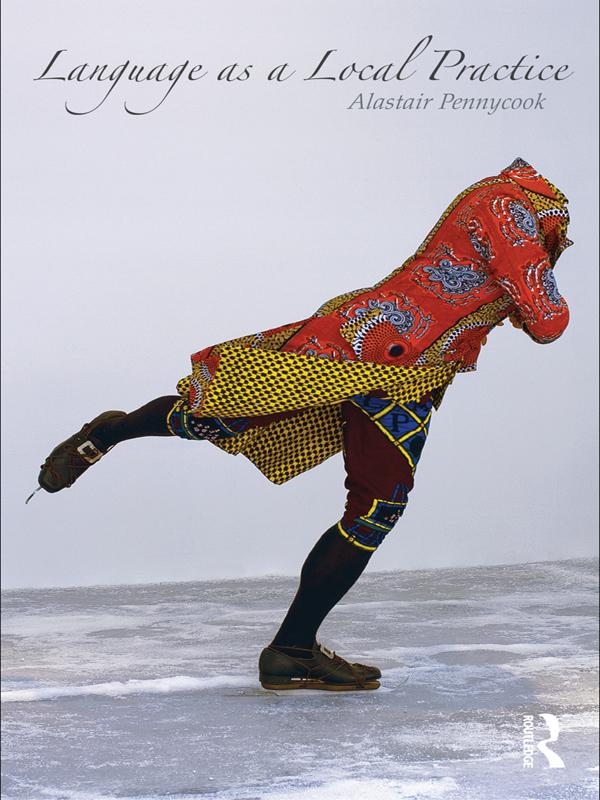
Language as a Local Practice addresses the questions of language, locality and practice as a way of moving forward in our understanding of how language operates as an integrated social and spatial activity.
By taking each of these three elements – language, locality and practice – and exploring how they relate to each other, Language as a Local Practice opens up new ways of thinking about language. It questions assumptions about languages as systems or as countable entities, and suggests instead that language emerges from the activities it performs. To look at language as a practice is to view language as an activity rather than a structure, as something we do rather than a system we draw on, as a material part of social and cultural life rather than an abstract entity.
Language as a Local Practice draws on a variety of contexts of language use, from bank machines to postcards, Indian newspaper articles to fish-naming in the Philippines, urban graffiti to mission statements, suggesting that rather than thinking in terms of language use in context, we need to consider how language, space and place are related, how language creates the contexts where it is used, how languages are the products of socially located activities and how they are part of the action.
Language as a Local Practice will be of interest to students on advanced undergraduate and post graduate courses in Applied Linguistics, Language Education, TESOL, Literacy and Cultural Studies.
Betal enkelt med kort, Klarna, Apple Pay eller Google Pay. Ikke fornøyd? Du har alltid 14 dagers angrerett. Les mer i våre vilkår. Har du spørsmål, send oss en e-post på hello@memmo.org.
Memmo gjør det enklere å studere – uansett hvor du er i verden. Hos oss samler du pensumbøker og smarte studieverktøy på ett og samme sted: sammendrag, quizer, podkaster og flashcards. Og så Ted, din studiekompis som svarer på alt du lurer på. Over 50 000 studenter studerer allerede her – bygget for at du skal lære raskere og stresse mindre.