
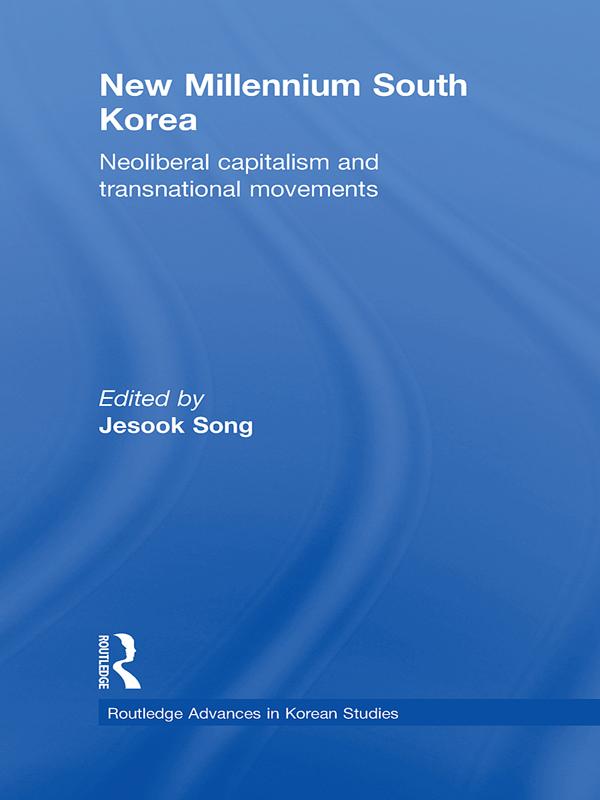
Despite the common held belief that Asian nations have displayed anti-market tendencies of under-consumption and export-oriented trade since the Asian financial crisis, in the 10 years since the crisis, South Korea has bucked this trend accruing a higher debt rate than the US. This groundbreaking collection of essays addresses questions such as how did the open market policies and restructuring processes implemented during the Asian financial crisis magnify the consumption and debt level in South Korea to such an extent? What is the impact of these financial changes on the daily lives of people in different cultural and socio-economic groups? In examining these questions the authors provide valuable insight into the rise of financial capitalism, transnational mobility and the implications of neoliberal governing tactics following the Asian Financial Crisis.
Examining South Korea’s transformation during the early years of the 21st century, New Millenium South Korea will be of interest to anthropologists, economists and sociologists, as well as students and scholars of Korean Studies.
Betal enkelt med kort, Klarna, Apple Pay eller Google Pay. Ikke fornøyd? Du har alltid 14 dagers angrerett. Les mer i våre vilkår. Har du spørsmål, send oss en e-post på hello@memmo.org.
Memmo gjør det enklere å studere – uansett hvor du er i verden. Hos oss samler du pensumbøker og smarte studieverktøy på ett og samme sted: sammendrag, quizer, podkaster og flashcards. Og så Ted, din studiekompis som svarer på alt du lurer på. Over 50 000 studenter studerer allerede her – bygget for at du skal lære raskere og stresse mindre.