
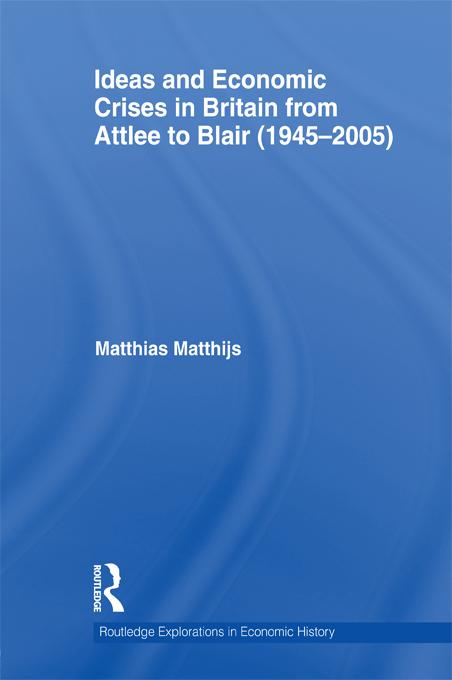
During the period from 1945 to 2005, Britain underwent two deep-seated institutional transformations when political elites successfully challenged the prevailing wisdom on how to govern the economy. Attlee and Thatcher were able to effectively implement most of their political platforms. During this period there were also two opportunities to challenge existing institutional arrangements. Heath's 'U-turn' in 1972 signalled his failure to implement the radical agenda promised upon election in 1970, whilst Tony Blair’s New Labour similarly failed to instigate a major break with the 'Thatcherite' settlement.
Rather than simply retell the story of British economic policymaking since World War II, this book offers a theoretically informed version of events, which draws upon the literatures on institutional path dependence, economic constructivism and political economy to explain this puzzle. It will be of great interest to both researchers and postgraduates with an interest in British economic history and the fields of political economy and economic crisis more widely.
Betal enkelt med kort, Klarna, Apple Pay eller Google Pay. Ikke fornøyd? Du har alltid 14 dagers angrerett. Les mer i våre vilkår. Har du spørsmål, send oss en e-post på hello@memmo.org.
Memmo gjør det enklere å studere – uansett hvor du er i verden. Hos oss samler du pensumbøker og smarte studieverktøy på ett og samme sted: sammendrag, quizer, podkaster og flashcards. Og så Ted, din studiekompis som svarer på alt du lurer på. Over 50 000 studenter studerer allerede her – bygget for at du skal lære raskere og stresse mindre.