
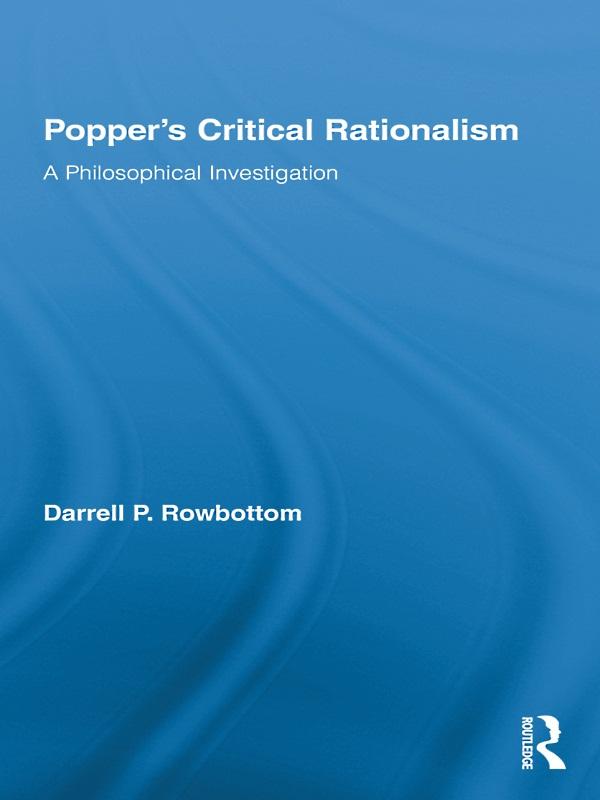
Popper’s Critical Rationalism presents Popper’s views on science, knowledge, and inquiry, and examines the significance and tenability of these in light of recent developments in philosophy of science, philosophy of probability, and epistemology. It develops a fresh and novel philosophical position on science, which employs key insights from Popper while rejecting other elements of his philosophy.
Central theses include:
- Crucial questions about scientific method arise at the level of the group, rather than that of the individual.
- Although criticism is vital for science, dogmatism is important too.
- Belief in scientific theories is permissible even in the absence of evidence in their favour.
- The aim of science is to eliminate false theories.
- Critical rationalism can be understood as a form of virtue epistemology
Betal enkelt med kort, Klarna, Apple Pay eller Google Pay. Ikke fornøyd? Du har alltid 14 dagers angrerett. Les mer i våre vilkår. Har du spørsmål, send oss en e-post på hello@memmo.org.
Memmo gjør det enklere å studere – uansett hvor du er i verden. Hos oss samler du pensumbøker og smarte studieverktøy på ett og samme sted: sammendrag, quizer, podkaster og flashcards. Og så Ted, din studiekompis som svarer på alt du lurer på. Over 50 000 studenter studerer allerede her – bygget for at du skal lære raskere og stresse mindre.