
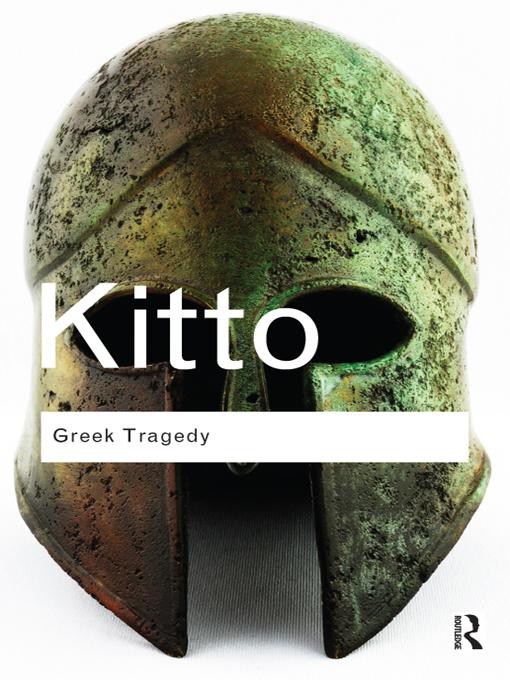
Why did Aeschylus characterize differently from Sophocles? Why did Sophocles introduce the third actor? Why did Euripides not make better plots? So asks H.D.F Kitto in his acclaimed study of Greek tragedy, available for the first time in Routledge Classics.
Kitto argues that in spite of dealing with big moral and intellectual questions, the Greek dramatist is above all an artist and the key to understanding classical Greek drama is to try and understand the tragic conception of each play. In Kitto’s words ‘We shall ask what the dramatist is striving to say, not what in fact he does say about this or that.’ Through a brilliant analysis of Aeschylus’s ‘Oresteia’, the plays of Sophocles including ‘Antigone’ and ‘Oedipus Tyrannus’; and Euripides’s ‘Medea’ and ‘Hecuba’, Kitto skilfully conveys the enduring artistic and literary brilliance of the Greek dramatists.
Betal enkelt med kort, Klarna, Apple Pay eller Google Pay. Ikke fornøyd? Du har alltid 14 dagers angrerett. Les mer i våre vilkår. Har du spørsmål, send oss en e-post på hello@memmo.org.
Memmo gjør det enklere å studere – uansett hvor du er i verden. Hos oss samler du pensumbøker og smarte studieverktøy på ett og samme sted: sammendrag, quizer, podkaster og flashcards. Og så Ted, din studiekompis som svarer på alt du lurer på. Over 50 000 studenter studerer allerede her – bygget for at du skal lære raskere og stresse mindre.