
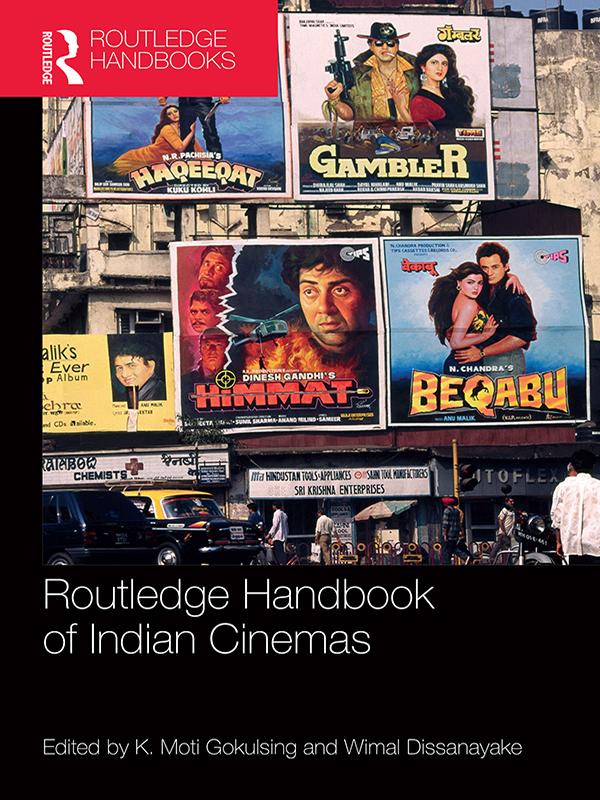
India is the largest film producing country in the world and its output has a global reach. After years of marginalisation by academics in the Western world, Indian cinemas have moved from the periphery to the centre of the world cinema in a comparatively short space of time. Bringing together contributions from leading scholars in the field, this Handbook looks at the complex reasons for this remarkable journey.
Combining a historical and thematic approach, the Handbook discusses how Indian cinemas need to be understood in their historical unfolding as well as their complex relationships to social, economic, cultural, political, ideological, aesthetic, technical and institutional discourses. The thematic section provides an up-to-date critical narrative on diverse topics such as audience, censorship, film distribution, film industry, diaspora, sexuality, film music and nationalism.
The Handbook provides a comprehensive and cutting edge survey of Indian cinemas, discussing Popular, Parallel/New Wave and Regional cinemas as well as the spectacular rise of Bollywood. It is an invaluable resource for students and academics of South Asian Studies, Film Studies and Cultural Studies.
Betal enkelt med kort, Klarna, Apple Pay eller Google Pay. Ikke fornøyd? Du har alltid 14 dagers angrerett. Les mer i våre vilkår. Har du spørsmål, send oss en e-post på hello@memmo.org.
Memmo gjør det enklere å studere – uansett hvor du er i verden. Hos oss samler du pensumbøker og smarte studieverktøy på ett og samme sted: sammendrag, quizer, podkaster og flashcards. Og så Ted, din studiekompis som svarer på alt du lurer på. Over 50 000 studenter studerer allerede her – bygget for at du skal lære raskere og stresse mindre.