
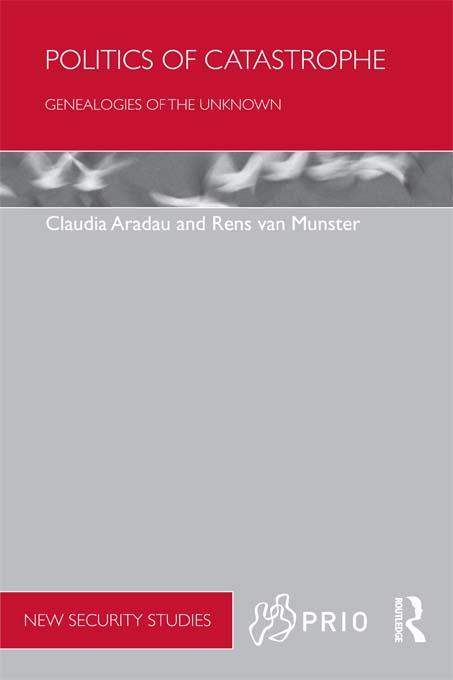
This book argues that catastrophe is a particular way of governing future events – such as terrorism, climate change or pandemics – which we cannot predict but which may strike suddenly, without warning, and cause irreversible damage.
At a time where catastrophe increasingly functions as a signifier of our future, imaginaries of pending doom have fostered new modes of anticipatory knowledge and redeployed existing ones. Although it shares many similarities with crises, disasters, risks and other disruptive incidents, this book claims that catastrophes also bring out the very limits of knowledge and management. The politics of catastrophe is turned towards an unknown future, which must be imagined and inhabited in order to be made palpable, knowable and actionable. Politics of Catastrophe critically assesses the effects of these new practices of knowing and governing catastrophes to come and challenges the reader to think about the possibility of an alternative politics of catastrophe.
This book will be of interest to students of critical security studies, risk theory, political theory and International Relations in general.
Betal enkelt med kort, Klarna, Apple Pay eller Google Pay. Ikke fornøyd? Du har alltid 14 dagers angrerett. Les mer i våre vilkår. Har du spørsmål, send oss en e-post på hello@memmo.org.
Memmo gjør det enklere å studere – uansett hvor du er i verden. Hos oss samler du pensumbøker og smarte studieverktøy på ett og samme sted: sammendrag, quizer, podkaster og flashcards. Og så Ted, din studiekompis som svarer på alt du lurer på. Over 50 000 studenter studerer allerede her – bygget for at du skal lære raskere og stresse mindre.