
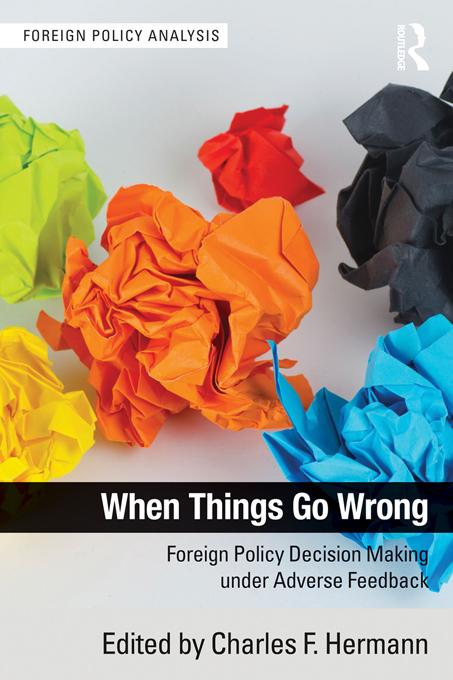
What happens when a government begins a major foreign policy commitment and then later receives new information that it is failing? The question of how to deal with adverse feedback to high-stakes foreign policy speaks to a number of important, current scenarios in international relations. Indeed, how to handle signs that major prior commitments are not working as intended is common to every aspect of human existence—from the owner of an old car who has to decide whether to make additional repairs after a critical breakdown, to management deciding what course to follow when a new investment fails.
Important work has been undertaken on this decision dilemma in a variety of fields. This book brings many of these insights to bear on the especially challenging circumstances where life and death and international politics can add dramatically to the costs of ineffective reactions. The esteemed contributors to this book offer explanations and illustrative case studies of these critical choice points in foreign and national security policy. They offer alternative theoretical frameworks for determining if and when policy will change in response to evidence of failing efforts. Competing theories from several of disciplines—primarily psychology, political science and management—offer insight into a subject that has been rarely studied in foreign policy, yet is as current as today’s headlines.
Betal enkelt med kort, Klarna, Apple Pay eller Google Pay. Ikke fornøyd? Du har alltid 14 dagers angrerett. Les mer i våre vilkår. Har du spørsmål, send oss en e-post på hello@memmo.org.
Memmo gjør det enklere å studere – uansett hvor du er i verden. Hos oss samler du pensumbøker og smarte studieverktøy på ett og samme sted: sammendrag, quizer, podkaster og flashcards. Og så Ted, din studiekompis som svarer på alt du lurer på. Over 50 000 studenter studerer allerede her – bygget for at du skal lære raskere og stresse mindre.