
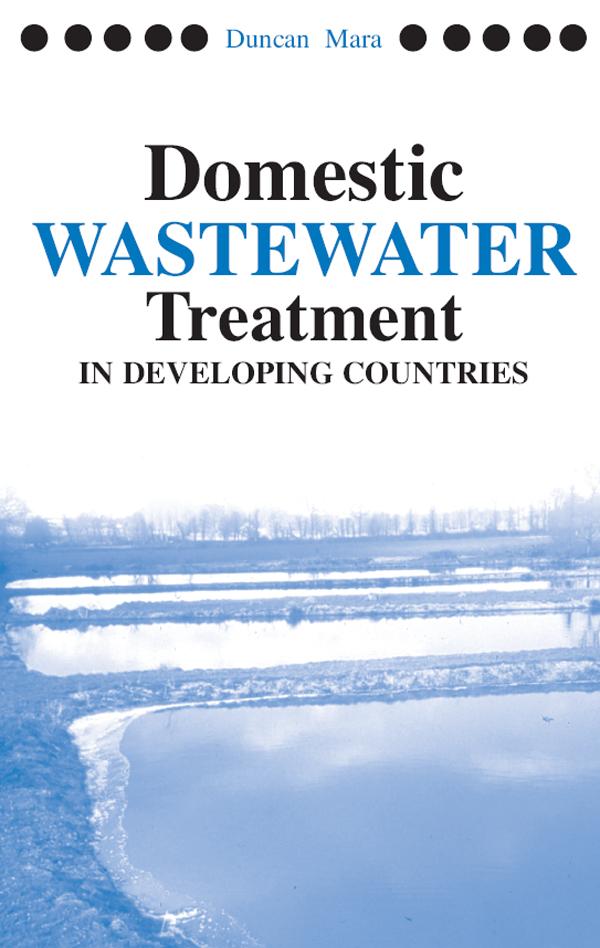
Affordable and effective domestic wastewater treatment is a critical issue in public health and disease prevention around the world, particularly so in developing countries which often lack the financial and technical resources necessary for proper treatment facilities.
This practical guide provides state-of-the-art coverage of methods for domestic wastewater treatment and provides a foundation to the practical design of wastewater treatment and re-use systems. The emphasis is on low-cost, low-energy, low-maintenance, high-performance 'natural' systems that contribute to environmental sustainability by producing effluents that can be safely and profitably used in agriculture for crop irrigation and/or in aquaculture, for fish and aquatic vegetable pond fertilization. Modern design methodologies, with worked design examples, are described for waste stabilization ponds, wastewater storage and treatment reservoirs; constructed wetlands, upflow anaerobic sludge blanket reactors, biofilters, aerated lagoons and oxidation ditches.
This book is essential reading for engineers, academics and upper-level and graduate students in engineering, wastewater management and public health, and others interested in sustainable and cost-effective technologies for reducing wastewater-related diseases and environmental damage.
Betal enkelt med kort, Klarna, Apple Pay eller Google Pay. Ikke fornøyd? Du har alltid 14 dagers angrerett. Les mer i våre vilkår. Har du spørsmål, send oss en e-post på hello@memmo.org.
Memmo gjør det enklere å studere – uansett hvor du er i verden. Hos oss samler du pensumbøker og smarte studieverktøy på ett og samme sted: sammendrag, quizer, podkaster og flashcards. Og så Ted, din studiekompis som svarer på alt du lurer på. Over 50 000 studenter studerer allerede her – bygget for at du skal lære raskere og stresse mindre.