
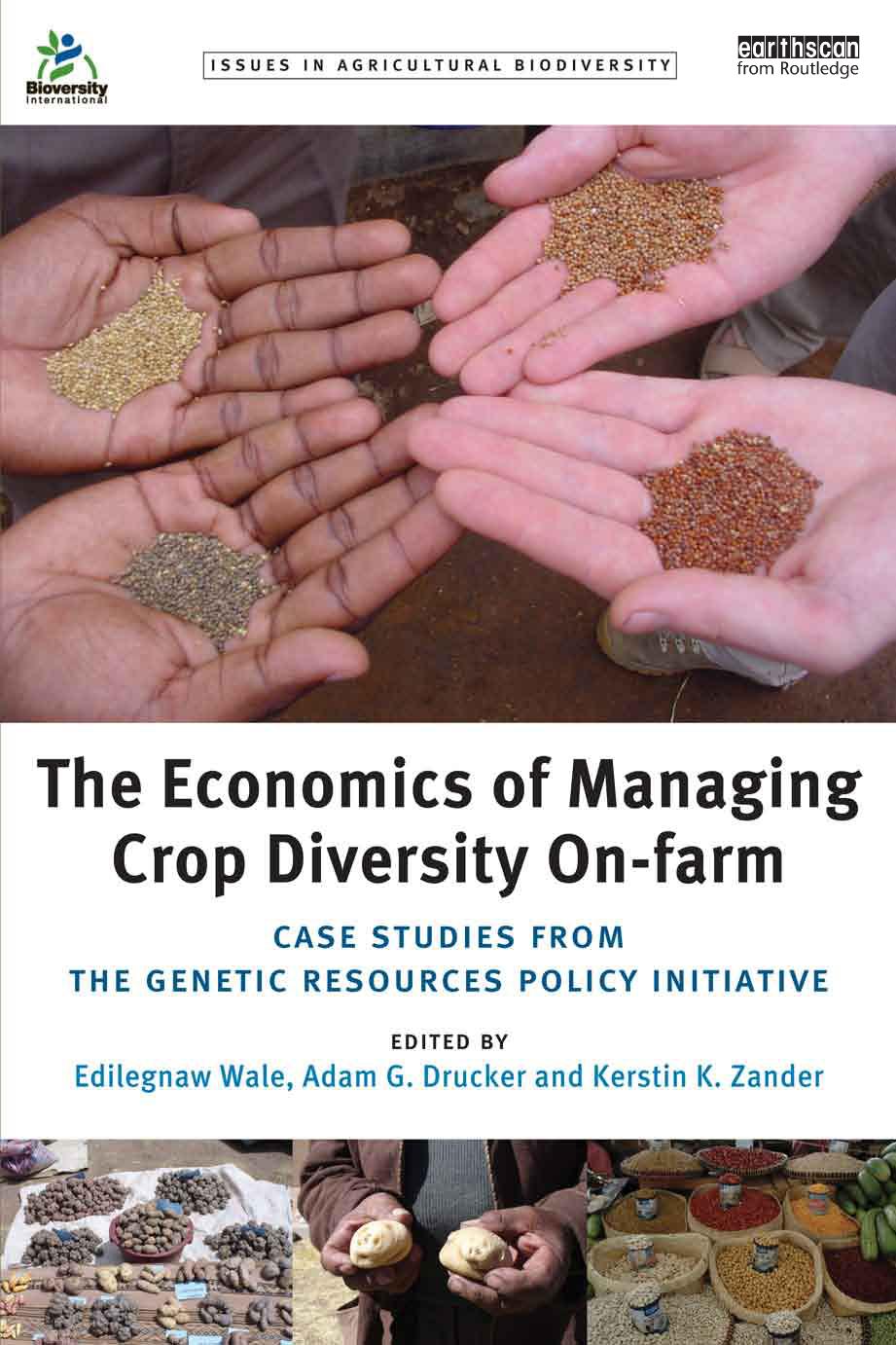
The purpose of this book is to assess a variety of economic issues as they relate to agro-biodiversity and show how addressing these issues can assist in agro-biodiversity policy-making. This is illustrated using empirical data from some of the countries (Ethiopia, Nepal and Zambia) which are part of the Genetic Resources Policy Initiative. The empirical chapters apply the relevant economic methods, including regression analysis, choice experiments, hedonic pricing, contingent valuation and farm business income analysis.
The authors discuss the economics of managing crop diversity on-farm in the context of crop variety attribute preferences, farmers' perception of agro-biodiversity loss, and value addition and marketing of the products of traditional crop varieties. The case studies include detailed analysis of traditional varieties of groundnut, maize, rice, sorghum, and teff. The results are relevant not only to GRPI countries but also to other countries concerned with the sustainable utilization of these resources. Overall, the studies illustrate how genetic resources issues can be integrated into rural development interventions.
Betal enkelt med kort, Klarna, Apple Pay eller Google Pay. Ikke fornøyd? Du har alltid 14 dagers angrerett. Les mer i våre vilkår. Har du spørsmål, send oss en e-post på hello@memmo.org.
Memmo gjør det enklere å studere – uansett hvor du er i verden. Hos oss samler du pensumbøker og smarte studieverktøy på ett og samme sted: sammendrag, quizer, podkaster og flashcards. Og så Ted, din studiekompis som svarer på alt du lurer på. Over 50 000 studenter studerer allerede her – bygget for at du skal lære raskere og stresse mindre.