
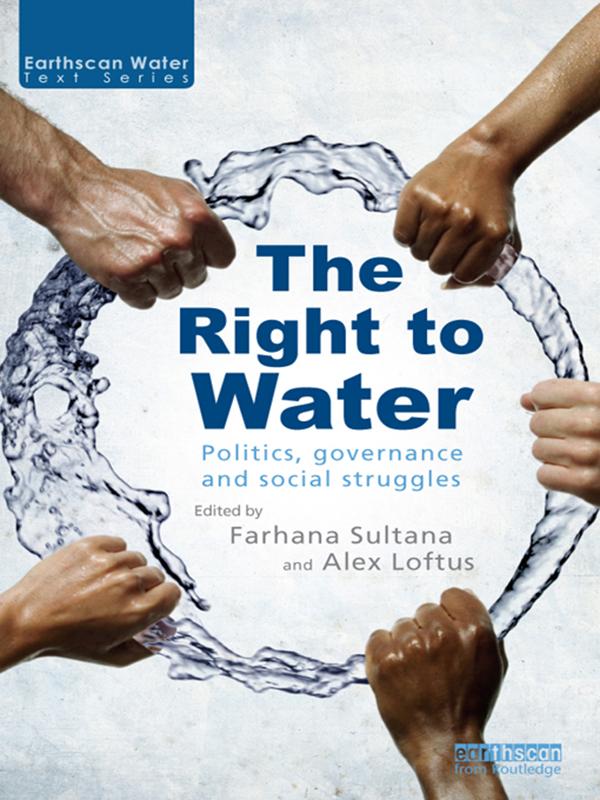
The right to clean water has been adopted by the United Nations as a basic human right. Yet how such universal calls for a right to water are understood, negotiated, experienced and struggled over remain key challenges. The Right to Water elucidates how universal calls for rights articulate with local historical geographical contexts, governance, politics and social struggles, thereby highlighting the challenges and the possibilities that exist. Bringing together a unique range of academics, policy-makers and activists, the book analyzes how struggles for the right to water have attempted to translate moral arguments over access to safe water into workable claims. This book is an intervention at a crucial moment into the shape and future direction of struggles for the right to water in a range of political, geographic and socio-economics contexts, seeking to be pro-active in defining what this struggle could mean and how it might be taken forward in a far broader transformative politics.
The Right to Water engages with a range of approaches that focus on philosophical, legal and governance perspectives before seeking to apply these more abstract arguments to an array of concrete struggles and case studies. In so doing, the book builds on empirical examples from Africa, Asia, Oceania, Latin America, the Middle East, North America and the European Union.
Betal enkelt med kort, Klarna, Apple Pay eller Google Pay. Ikke fornøyd? Du har alltid 14 dagers angrerett. Les mer i våre vilkår. Har du spørsmål, send oss en e-post på hello@memmo.org.
Memmo gjør det enklere å studere – uansett hvor du er i verden. Hos oss samler du pensumbøker og smarte studieverktøy på ett og samme sted: sammendrag, quizer, podkaster og flashcards. Og så Ted, din studiekompis som svarer på alt du lurer på. Over 50 000 studenter studerer allerede her – bygget for at du skal lære raskere og stresse mindre.