
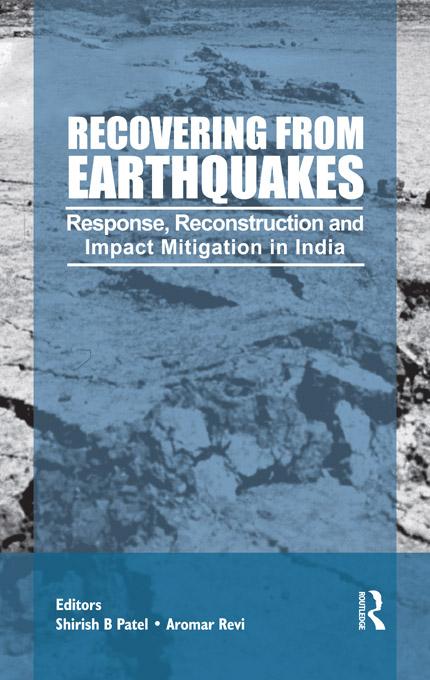
Earthquakes come without warming, and often cause massive devastation, resulting not only in the loss of property but also of lives. Many of the survivors suffer from intense and lasting psychological trauma. This book covers the experience of recent earthquakes in India, and what has been learnt (and what we have failed to learn) in the process of managing the aftermath in each case. This includes immediate medical attention, long-term mental health care, and the reconstruction of housing and infrastructure in both rural and urban areas.
The experiences of the contributors, many of whom have actively contributed their expertise to disaster management and recovery, help us understand what problems require a swift response and which aspects should be based on detailed analyses keeping in mind local conditions. Reconstruction is seen as offering an opportunity to rebuild society such that all sections of the population are empowered and brought into the community’s decision-making process. It is also an opportunity to develop construction techniques that are suited to local materials and skills but are also more earthquake-resistant than the old. And finally, there is the realisation that the best first responders are local community groups which need to be nurtured, and trained in crisis management and risk mitigation.
Betal enkelt med kort, Klarna, Apple Pay eller Google Pay. Ikke fornøyd? Du har alltid 14 dagers angrerett. Les mer i våre vilkår. Har du spørsmål, send oss en e-post på hello@memmo.org.
Memmo gjør det enklere å studere – uansett hvor du er i verden. Hos oss samler du pensumbøker og smarte studieverktøy på ett og samme sted: sammendrag, quizer, podkaster og flashcards. Og så Ted, din studiekompis som svarer på alt du lurer på. Over 50 000 studenter studerer allerede her – bygget for at du skal lære raskere og stresse mindre.