
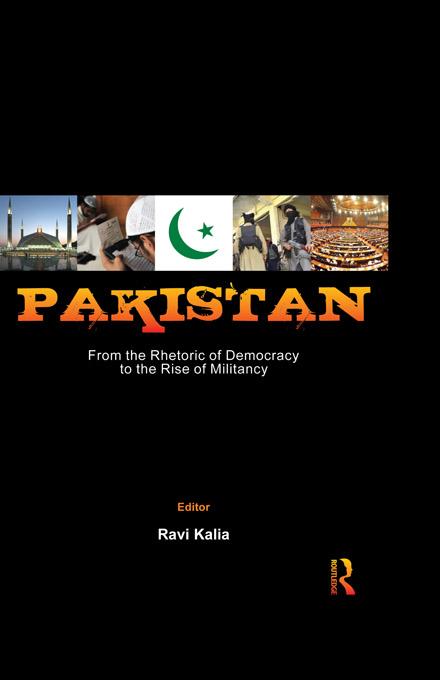
The essays in this volume address the central theme of Pakistan’s enduring, yet elusive, quest for democracy. The book charts Pakistan’s struggle from its very inception, at least in the political rhetoric provided by both civilian and military leaders, for democracy, liberalism, freedom of expression, inclusiveness of minorities and even secularism. At the same time, it demonstrates how in practice, the country has continued to drift towards increasingly brittle authoritarianism, religious extremism and intolerance of minorities — both Muslim and non-Muslim. This chasm between animated political rhetoric and grim political reality has baffled the world as much as Pakistanis themselves. In this volume, scholars and practitioners of statecraft from around the world have sought to explain the dichotomy that exists between the rhetoric and the reality. Crucial areas such as Pakistan’s troubled status as a theocracy; its relationship with the US; the position of women and their quest for empowerment; the Mujahir Qaumi movement; the sharp class divide that has led to an elitist political culture; and finally, an erudite discussion of the popular topic — Jinnah’s vision of Pakistan — are the focus of this book.
This volume will be of interest to scholars of history, political science, international relations, sociology, anthropology and urban planning, policy-makers and think-tanks, as well as the wider reading public curious about South Asia.
Betal enkelt med kort, Klarna, Apple Pay eller Google Pay. Ikke fornøyd? Du har alltid 14 dagers angrerett. Les mer i våre vilkår. Har du spørsmål, send oss en e-post på hello@memmo.org.
Memmo gjør det enklere å studere – uansett hvor du er i verden. Hos oss samler du pensumbøker og smarte studieverktøy på ett og samme sted: sammendrag, quizer, podkaster og flashcards. Og så Ted, din studiekompis som svarer på alt du lurer på. Over 50 000 studenter studerer allerede her – bygget for at du skal lære raskere og stresse mindre.