
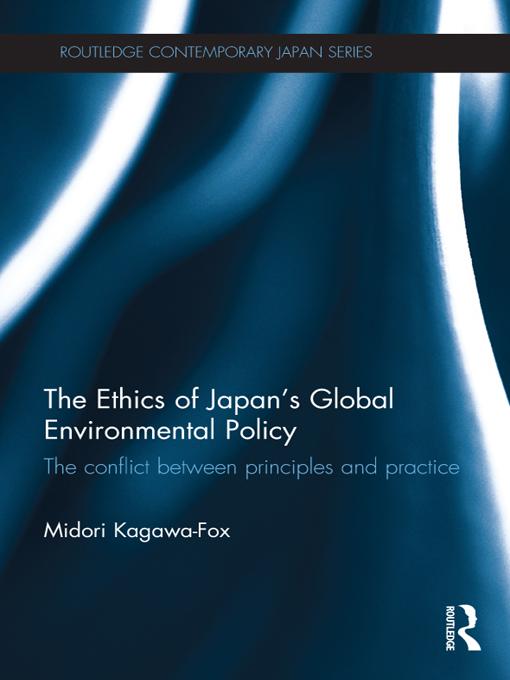
This book examines the Japanese government policies that impact on the environment in order to determine whether they incorporate a sufficient ethical substance. Through the three case studies on whaling, nuclear energy, and forestry, the author explores how Western philosophers combined their theories to develop a ‘Western environmental ethics code’ and reveals the existence of a unique ‘Japanese environmental ethics code’ built on Japan’s cultural traditions, religious practices, and empirical experiences.
Kagawa-Fox’s discussions show that in spite of the positive contributions that Japan has made towards the global environment, the government has failed to show a corresponding moral obligation to the world ecology in its environmental policy. The book argues that this is a result of the integrity of the policies having been compromised by vested interests and that Japanese business and politics ensure that the policies are primarily focused on maintaining sustainable economic growth. Whilst Japan's global environmental initiatives are the key to its economic survival in the 21st century, and these initiatives may achieve their aims, they do however fail the Japanese code of environmental ethics.
This book is essential reading for anyone interested in Environmental Studies, Environmental Policy and Ethics, Japanese Politics and Japanese Culture and Society.
Betal enkelt med kort, Klarna, Apple Pay eller Google Pay. Ikke fornøyd? Du har alltid 14 dagers angrerett. Les mer i våre vilkår. Har du spørsmål, send oss en e-post på hello@memmo.org.
Memmo gjør det enklere å studere – uansett hvor du er i verden. Hos oss samler du pensumbøker og smarte studieverktøy på ett og samme sted: sammendrag, quizer, podkaster og flashcards. Og så Ted, din studiekompis som svarer på alt du lurer på. Over 50 000 studenter studerer allerede her – bygget for at du skal lære raskere og stresse mindre.