
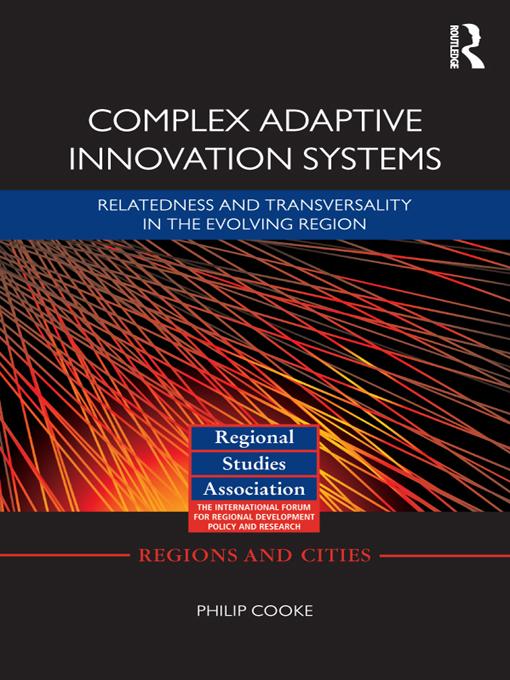
Leading up to the financial crisis of 2008 and onwards, the shortcomings of traditional models of regional economic and environmental development had become increasingly evident. Rooted in the idea that ‘policy’ is an encumbrance to free markets, the stress on supply-side smoothing measures such as clusters and an over reliance on venture capital, the inadequacy of existing orthodoxies has come to be replaced by the notion of Transversality.
This approach has three strong characteristics that differentiate it from its failing predecessor. First, as the name implies, it seeks to finesse horizontal knowledge interactions as well as vertical ones, thus building ‘platforms’ of industrial interaction. Secondly, it is not a supply, but a demand side model in which needs-driven innovation rather than pure market competition prevails. Finally, it is ongoing through recessionary times, being more robust than over-specialised approaches to economic growth.
The intellectual origins of Transversality lie in an aspiration to promote eco-innovation, one of the key hopes of assisting Western regional and national economies to re-balance and escape recession. The policy models of key regional exponents of the concept are explored and their goals achievement is assessed. An array of policy instruments and measures is presented for hands-on policy implementation. The book will be of vital interest to academics as teachers and researchers as well as policy advisers and public servants.
Betal enkelt med kort, Klarna, Apple Pay eller Google Pay. Ikke fornøyd? Du har alltid 14 dagers angrerett. Les mer i våre vilkår. Har du spørsmål, send oss en e-post på hello@memmo.org.
Memmo gjør det enklere å studere – uansett hvor du er i verden. Hos oss samler du pensumbøker og smarte studieverktøy på ett og samme sted: sammendrag, quizer, podkaster og flashcards. Og så Ted, din studiekompis som svarer på alt du lurer på. Over 50 000 studenter studerer allerede her – bygget for at du skal lære raskere og stresse mindre.