
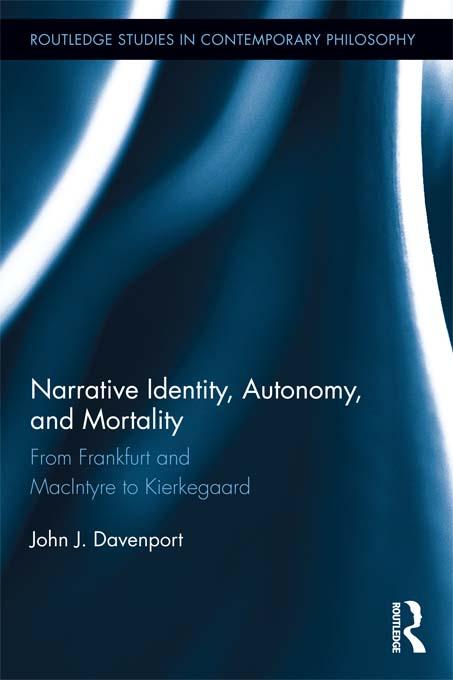
In the last two decades, interest in narrative conceptions of identity has grown exponentially, though there is little agreement about what a "life-narrative" might be. In connecting Kierkegaard with virtue ethics, several scholars have recently argued that narrative models of selves and MacIntyre's concept of the unity of a life help make sense of Kierkegaard's existential stages and, in particular, explain the transition from "aesthetic" to "ethical" modes of life. But others have recently raised difficult questions both for these readings of Kierkegaard and for narrative accounts of identity that draw on the work of MacIntyre in general. While some of these objections concern a strong kind of unity or "wholeheartedness" among an agent's long-term goals or cares, the fundamental objection raised by critics is that personal identity cannot be a narrative, since stories are artifacts made by persons. In this book, Davenport defends the narrative approach to practical identity and autonomy in general, and to Kierkegaard's stages in particular.
Betal enkelt med kort, Klarna, Apple Pay eller Google Pay. Ikke fornøyd? Du har alltid 14 dagers angrerett. Les mer i våre vilkår. Har du spørsmål, send oss en e-post på hello@memmo.org.
Memmo gjør det enklere å studere – uansett hvor du er i verden. Hos oss samler du pensumbøker og smarte studieverktøy på ett og samme sted: sammendrag, quizer, podkaster og flashcards. Og så Ted, din studiekompis som svarer på alt du lurer på. Over 50 000 studenter studerer allerede her – bygget for at du skal lære raskere og stresse mindre.